
The US Humanoid Robot Industry Falls Behind as Global Competition Accelerates

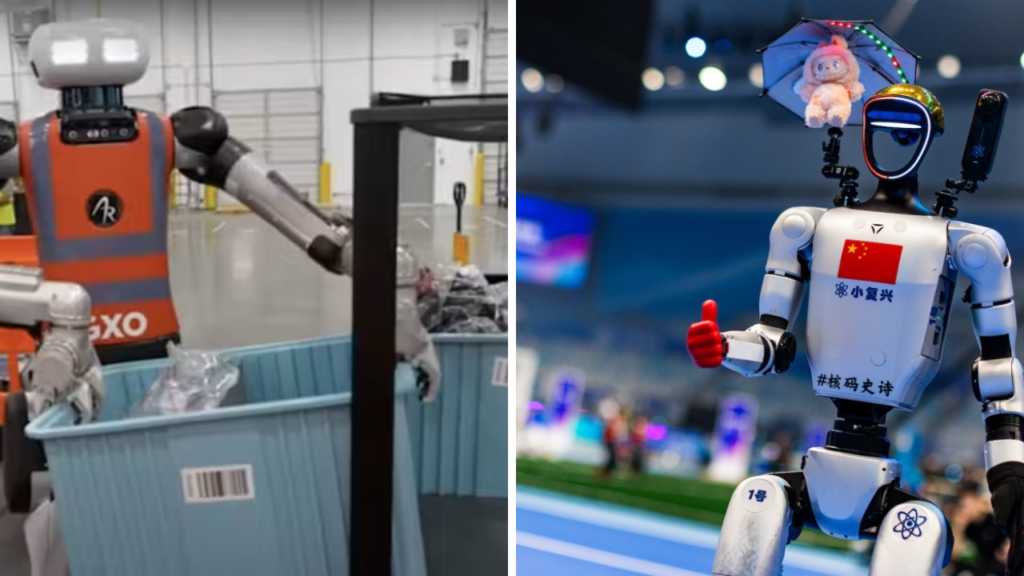
The global race to develop humanoid robots is heating up, with countries pouring money into artificial intelligence, advanced manufacturing and robotics. Recent industry reports reveal that the U.S. humanoid robot industry is under mounting pressure as international competitors accelerate development, ramp up production and introduce new commercial applications.

The US remains at the forefront of AI research and software innovation but the wider humanoid robotics market has been a lot more competitive, analysts say. “As production capacity in Asia, particularly China, grows rapidly, there are concerns about how the U.S. can stay competitive in one of the fastest-growing sectors of the tech world.”

World Investment in Humanoid Robots Is Booming
Technology companies, manufacturers and governments around the world are strategically focusing on humanoid robots. These robots, made possible by advances in artificial intelligence, computer vision and machine learning, are being adapted to perform tasks in areas such as warehouse operations, factory work, healthcare and customer service.

As the need for automation increases, companies are pouring billions of dollars into research, hardware and AI software. That means new humanoid robot prototypes are hitting the market faster than ever before.

Industry experts say commercial deployment is expected to grow as technology advances and costs come down.
US Companies Continue to Lead in AI Innovation
There are concerns about global competition but American companies are still leading the charge on AI development. Many of the advances in large language models, robotics software, autonomous systems and advanced semiconductor technology are being developed by American companies.
These strengths give American developers a big edge in creating smart, human-like robots that can understand natural language, navigate complex environments, and adapt to changing circumstances.
But experts say leadership in AI software does not necessarily mean leadership in large-scale robot manufacturing.
Manufacturing Scale: A Competitive Challenge
One of the biggest challenges the U.S. humanoid robotics industry faces is manufacturing at scale. Countries with large electronics supply chains and high-volume manufacturing capacity may be able to build robots more quickly and cheaply.
Lowering production costs could help make humanoid robots more affordable for businesses in sectors including logistics, manufacturing, hospitality and healthcare.
American firms may have to bolster domestic manufacturing, expand supply chains and invest more in robotics production to stay competitive.
Artificial intelligence remains the leading engine of
Artificial intelligence is the technology that will make humanoid robots as capable as they are. Advances in reasoning, motion planning, speech recognition and real-time decision making mean robots are now able to perform ever more sophisticated tasks.
Developers are also working on safer human-robot interaction, improved battery performance and better mobility. These innovations will help make humanoids more useful for everyday business tasks in the years to come.
So it’s not just about the hardware, but the AI systems that are behind that robotic behaviour.
The Industry’s Future
The United States is still well positioned to compete through continued innovation, private investment and collaboration between technology companies, universities and research institutions, despite the accelerating pace of international competition, analysts say.
For the U.S. humanoid robot industry to succeed in the long term, it will likely need to strike a balance between AI leadership and stronger manufacturing capabilities and faster commercial deployment.
And with the world’s appetite for intelligent robots only increasing, the competition is likely to spur even more progress that could transform industries around the globe.
Sources
- nvidea – Official information about AI computing platforms, robotics software and humanoid robot technology.
- Boston Dynamic – Top latest news on advanced robotics research & applications.
- Tesla AI – Latest on Tesla’s Optimus humanoid robot and AI developments
- Reuters – world technology news, robotics investment and trends.
- IEEE Spectrum – advances in robotics research and engineering innovations and artificial intelligence.
