
Google Develops a New Gemini AI Chip Designed to Improve Performance and Efficiency

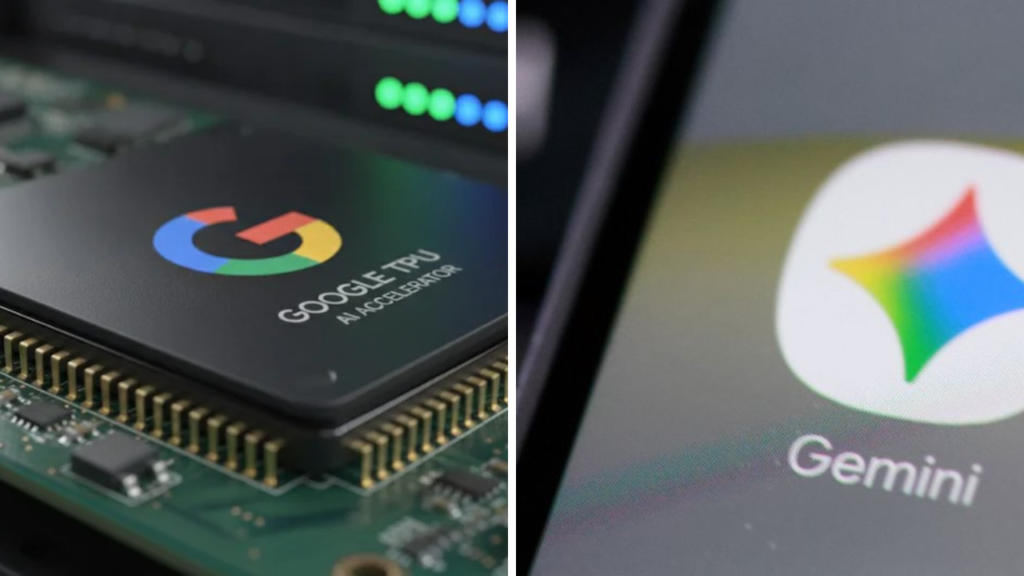
Google is reportedly working on a new Gemini AI chip that will help boost the performance and efficiency of its next-generation AI models. The custom hardware is expected to support more complex AI workloads, while cutting energy use and boosting processing speeds across the expanding AI ecosystem at Google.

Google has not disclosed detailed technical specifications of the reported chip, but industry watchers say it underscores the company’s continued push into custom silicon to bolster its AI infrastructure and reduce reliance on outside hardware.
Gemini AI Chip May Fuel Future AI Models
The Gemini AI chip is expected to be instrumental in training and running future versions of Google’s Gemini family of AI models. Generative AI systems are becoming larger and more sophisticated, but they need enormous computing power to efficiently handle billions of parameters.

A custom-designed processor would allow Google to optimise performance for its AI software, instead of just general hardware. This can lead to faster response times, higher throughput and lower operating costs for Google’s cloud services and AI-powered products.

The chip can also scale advanced reasoning, multimodal AI and inference workloads.
Custom Silicon is Now a Strategic Priority
For years, Google has been putting money into custom chips — most notably the Tensor Processing Units (TPUs), which are custom-built for machine learning. These chips already run much of Google’s AI services and cloud infrastructure.
The rumoured Gemini AI chip would take this approach even further, with hardware designed for the specific needs of today’s generative AI models. Silicon designed specifically for the task can improve efficiency by optimising memory access, data movement and AI-specific mathematical operations.
This allows companies to scale their AI services more efficiently, with less effect on power consumption and infrastructure costs.
“Faster AI, More Energy Efficient”
One of the primary goals of custom AI hardware is performance per watt. And with the growth of the size of AI models, energy efficiency has become as important as raw computing power.
A more efficient AI chip would allow Google to run more workloads with less power, and reduce latency for users. That would be good for cloud customers, developers and consumers using AI-powered tools for productivity, search, coding, image generation and other purposes.
Greater efficiency could also help data centres cope with surging AI demand without corresponding power increases.
The race for AI hardware keeps heating up.
Google isn’t the only company developing specialised AI processors. NVIDIA, AMD, Intel, Amazon, Microsoft and others are all pouring money into hardware for artificial intelligence workloads.
Custom chips have become an important competitive advantage, since they allow technology companies to optimise hardware and software together. This integrated approach can enhance the performance and reduce the long-term operating costs.
As AI adoption speeds up, the rivalry among chip designers is expected to intensify.
Implication for Google Cloud and Gemini Users
The rumoured Gemini AI chip could also be a boon for Google’s cloud infrastructure and power future Gemini-driven services across Search, Workspace, Android and developer platforms.
Enterprise customers may get benefits like faster AI inference, better scalability and lower infrastructure costs, while everyday users may see faster responses and more capable AI features.
Google hasn’t announced a launch date or confirmed technical details for the reported chip. If the project goes forward, we should be hearing more in future official announcements.
Sources
- Google’s DeepMind – Gemini model updates, AI research, and future artificial intelligence technologies.
- Google Cloud – Insights into Google’s AI infrastructure, TPUs and enterprise AI services.
- Google AI Blog – machine learning, custom hardware, and AI innovation research papers.
- Reuters – Reporting on technology, semiconductor development and artificial intelligence initiatives.
- AnandTech – Analysis of AI processors, semiconductor technology & enterprise computing developments.
