
NASA Astronaut Chris Williams Returns to Earth After Completing International Space Station Mission

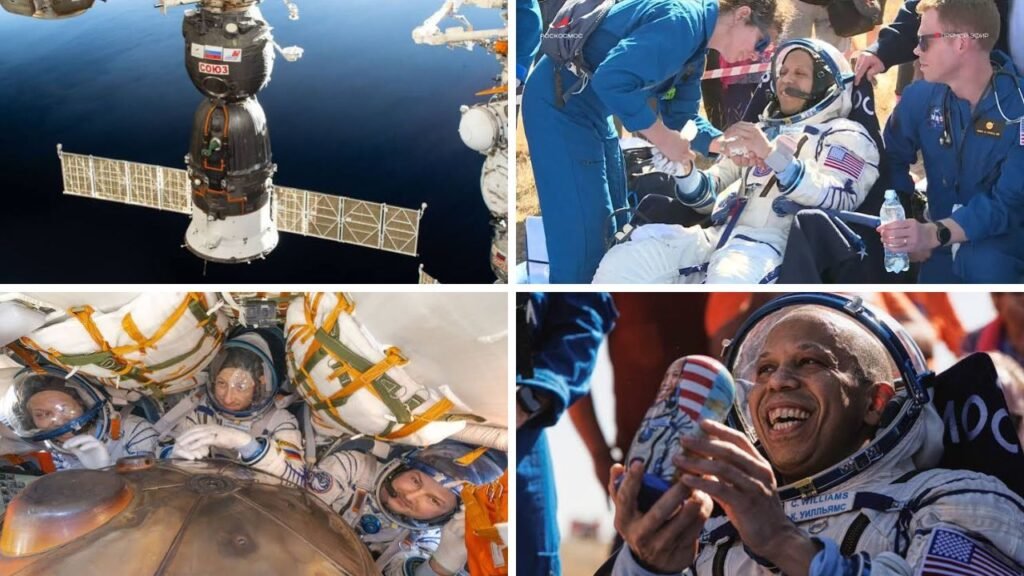
NASA astronaut Chris Williams returns to Earth following eight months on a science mission on the International Space Station. On July 26, 2026, Williams and Roscosmos cosmonauts Sergey Kud-Sverchkov and Sergei Mikaev landed safely in Kazakhstan. Their landing capped a challenging trip of science study, station maintenance and multinational partnership in low Earth orbit.

Chris Williams’ ISS Mission Ends with Safe Soyuz Landing
Chris Williams’ ISS mission ended with the Soyuz MS-28 spacecraft parachuting to a landing south-east of Dzhezkazgan. The capsule landed at 5:27 a.m. CDT after departing the station almost three and a half hours earlier. After landing, the crew made contact with recovery teams, who began routine medical checks to help the space travellers readjust to Earth’s gravity.
 Trump Administration Imposes New 10 Percent Tariffs on More Than 80 Countries in Major Trade Move
100 Million Miles, 8 Months in Space
They launched Nov. 27, 2025, and Williams and his crewmates spent 241 days in space. During this period, they performed 3,856 orbits of the Earth, covering more than 102 million miles. Williams and Mikaev were on their maiden space journey and it was Kud-Sverchkov’s second long-duration mission.
 Nearly 150000 California Mail Ballots Were Rejected Despite New Efforts to Count Every Vote
The mission also marked a notable career milestone for Williams, who served as an Expedition 74 flight engineer. His life on the station involved assisting with lab research, monitoring complicated systems, and working with crew members from different agencies and nations.
 Trump SAVE Act Push Meets Quiet Response From Republican Lawmakers Over New Election Claims
Health and High Technology Supported Science Work
Research that could benefit people on Earth and aid future exploration was an important part of Williams’ assignment. He assisted in experiments relating to possible new cancer treatments, NASA added. He has created methods to make sophisticated materials in microgravity for high-performance computers, electronics and associated technologies.
The International Space Station provides an environment that is difficult to replicate in laboratories on Earth. Microgravity allows researchers to explore biological processes, materials, and manufacturing techniques differently. Results from these tests could help to drive innovation in health care, commercial activities in low Earth orbit, and longer human expeditions to the Moon and Mars.
Two Spacewalks Boost Station Systems
On his first flight, Williams did two spacewalks. One aided in the preparation of the station’s power system for future modifications. In a different project, he teamed together with NASA astronaut Jessica Meir to replace a damaged wrist joint on the station’s big robotic arm, Canadarm2. That spacewalk took seven hours and 20 minutes, fixing a critical piece of the station’s operational system.
These tasks took careful planning, physical endurance and careful communication. They also showed how astronauts balance research duties with the hands-on maintenance work needed to keep the orbiting laboratory safe and productive.
Recovery Underway After Return to Earth
Following initial checks at the landing location, the crew flew by helicopter to Karaganda, Kazakhstan. Williams was next to fly to NASA’s Johnson Space Centre in Houston, where doctors will monitor his recovery from long-duration spaceflight. His crewmates will return to their training camp in Star City in Russia.
The successful landing also underscored continuing cooperation between NASA and Roscosmos. The United States and Russia may be politically at odds on Earth but their space agencies nevertheless share access to spacecraft, technical duties and crew operations on the International Space Station.
Sources
- NASA: Confirmed the crew landed safely after 241 days in space, conducting scientific research and two spacewalks.
- Reuters: reported that the Soyuz MS-28 landed in Zhezkazgan at 10:27 GMT on July 26.
- Associated Press: Crew’s landing, recovery and continued US-Russian space collaboration outlined.
- Space.com: Reported the undocking timeframe, 3,856 orbits completed, and more than 102 million miles traversed.
- Euronews: Featured Williams’ research on cancer and novel materials for computers and electronics.
