
Trump SAVE Act Push Meets Quiet Response From Republican Lawmakers Over New Election Claims

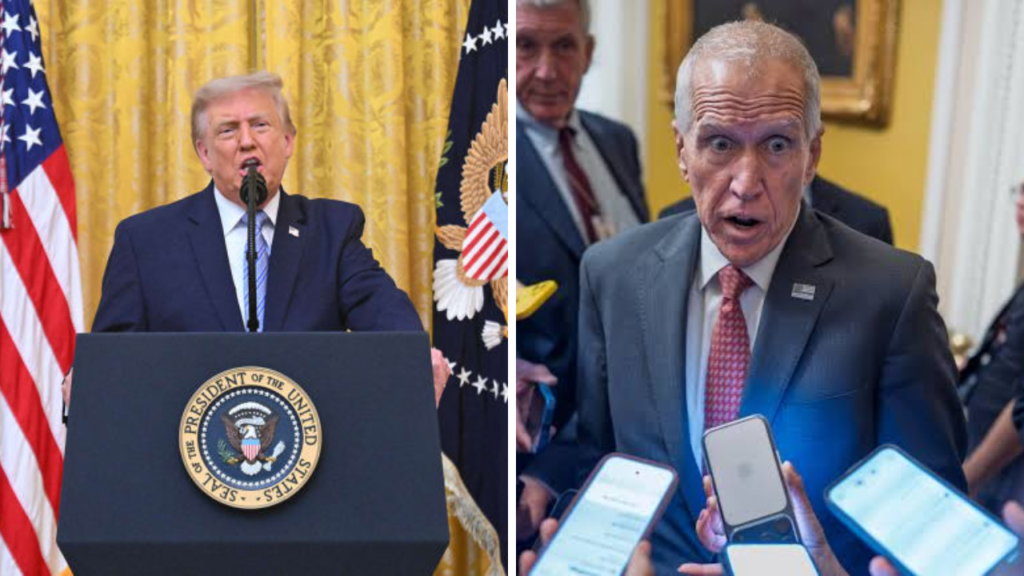
Former President Donald Trump again endorsed the Safeguard American Voter Eligibility (SAVE) Act, which would create stricter requirements for verifying voters’ eligibility in U.S. elections. His latest remarks have once again put election security front and centre in politics, but the response from many GOP lawmakers has been more tempered than in past discussions about elections.
 SpaceX Starship Flight 13 Launch Set for Today as Biggest Rocket Faces Crucial Test Mission
The SAVE Act has been a frequent topic in Washington, where supporters argue it would increase confidence in federal elections by requiring more evidence of U.S. citizenship when registering to vote. But critics say the proposal could create unnecessary hurdles for eligible voters. As debate rages on, lawmakers from both parties are split on whether the legislation is the right approach.

Trump Renews Backing for SAVE Act
Trump has said repeatedly that tighter voter registration rules are needed to protect the integrity of elections. He’s recently renewed his calls for lawmakers to support the SAVE Act and for stronger protections for illegal voting.
 Tesla Cybertruck Converted Into a MitzvahTruck Begins Cross Country Journey Across the United States
Backers of the bill say the legislation would require applicants to show documentary proof of U.S. citizenship when registering to vote in federal elections. They say the measure would increase voter confidence and decrease the likelihood of ineligible voters being added to the voter rolls.

Trump’s renewed focus on the proposal has made it a top issue in discussions over election policy ahead of upcoming federal races.
More Measured Response from Republicans
While some Republican lawmakers still support the SAVE Act, others have responded more cautiously to Trump’s newest claims about the election. Others opted to highlight bigger legislative priorities rather than directly respond to the former president’s comments.
The relatively muted response does not necessarily mean that people are against the bill. Rather, some legislation seems to be engaging in the legislative process and current election policy debates rather than political exchanges in the public arena.
Some political observers say Republican leaders are taking different communication strategies on election issues, with some wanting to focus on policy details rather than broad political messaging.
Supporters and Critics Still Divided
The SAVE Act’s supporters say that requiring proof of citizenship when voter registration takes place would enhance election security and boost public confidence in the voting system. They say only eligible U.S. citizens should be allowed to participate in federal elections and additional verification procedures would help ensure compliance with existing laws.
Opponents say there are relatively few documented cases of non-citizen voting in federal elections and more documentation requirements could make it harder to register some eligible voters who may not have ready access to the necessary records.
Voting rights groups have also expressed concern about how the proposal would impact registration processes if it were to become law.
Election Policy Remains a National Debate
Election administration has been one of the most watched political issues in the United States. Congress and state legislatures have considered a number of proposals relating to voter identification, absentee voting, voter registration procedures, and election administration in recent years.
The SAVE Act is one piece of that larger conversation. How far it gets through Congress will depend on lawmakers’ support in both chambers, and any future wrangling over election-related policy.
Whichever way, election security and voter access are likely to remain significant topics in the national political discourse.
Final decisions will be a function of the legislative process.
Trump has continued to promote the SAVE Act, but the legislation still must go through the normal congressional process before it can become law. That would require committee hearings and votes in the House and Senate, followed by a presidential signature.
Sources
- Reuters – Reuters provides fact-based reporting on U.S. politics, congressional developments, election policy and statements by public officials.
- Associated Press – The Associated Press reports broadly on federal legislation, election administration and political developments across the United States on a national basis.
- National Conference of State Legislatures – NCSL offers research and background materials on election administration, voter registration policies and state election laws across the U.S.
