
CBS Watson show cancellation leaves viewers with big questions

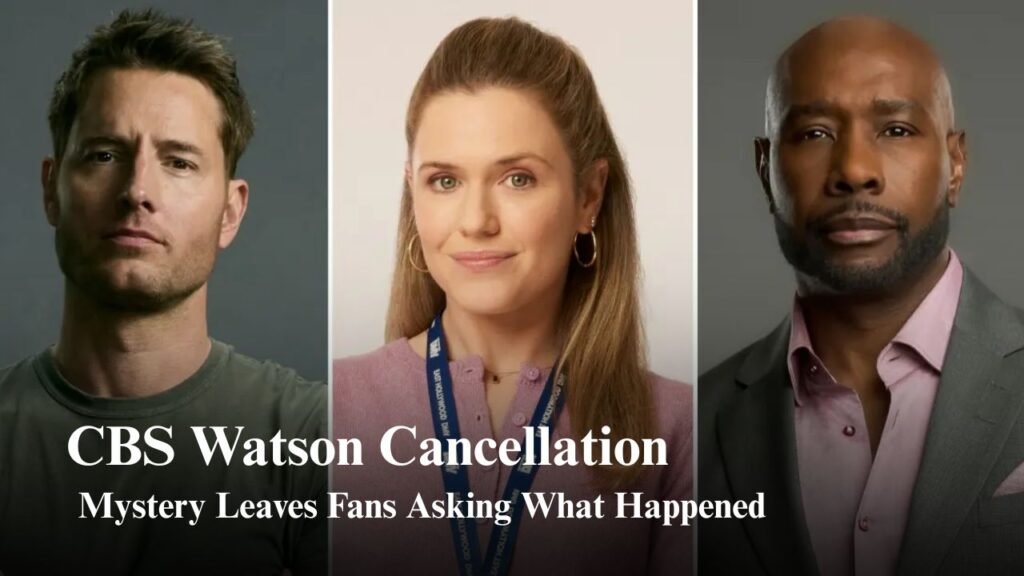
CBS Watson: The sudden end of CBS’s Watson has left viewers with the kind of uneasy silence that follows a mystery solved too quickly. For two seasons, the Morris Chestnut led drama tried to turn Dr. John Watson into more than Sherlock Holmes’s loyal companion. It gave him a clinic, a wounded heart, a brilliant team, and a world where medicine and detection could sit at the same table. Then, just as the story began opening darker doors, CBS closed them.

That is why the cancellation feels bigger than a routine network decision. Watson was not merely wrapping a case of the week. It was rebuilding a famous literary universe through grief, illness, memory, and doubt. Viewers were asked to question what was real, who could be trusted, and whether Watson could ever escape the shadow of Holmes. Now many of those questions remain hanging in the air.

Why CBS Pulled the Plug When Watson Still Had Secrets
The clearest answer is also the coldest one. Network television lives by numbers, scheduling needs, and space for new shows. CBS had already renewed many of its strongest performers before Watson’s fate became official, leaving the drama exposed. Even a recognizable title, a respected star, and a built in Sherlock connection could not fully protect it from the pressure of broadcast expectations.

Still, viewers are frustrated because ratings do not measure unfinished curiosity. A show can be financially vulnerable while creatively alive. Watson had settled into a tone that was unusual for CBS: part medical procedural, part psychological puzzle, part Holmes mythology. It was not always perfect, but it was gaining texture. The cancellation arrived at the exact moment when the series seemed ready to reward patient fans.

For many loyal viewers, the disappointment comes from three clear wounds:
- The story had just made Sherlock’s presence feel more complicated and urgent.
- Watson’s medical and emotional condition still needed deeper resolution.
- The Holmes Clinic team had room to grow beyond supporting roles.
Watson’s Final Case Turned Closure Into a Cliffhanger
The finale, The Cobalt Fissure, tried to work as both an ending and a doorway. That is a difficult balance for any cancelled series. The episode brought in pieces from Watson and Sherlock’s past, raised the stakes around old enemies, and pushed Watson toward a personal reckoning. Instead of giving fans a simple goodbye, it leaned into uncertainty, which made the final minutes feel haunting rather than neat.
Some viewers appreciated that choice. After all, ambiguity has always belonged to Sherlock Holmes stories. Deaths are questioned, identities shift, and truth often arrives wearing a disguise. But television audiences also invest years of emotion into characters.
The Sherlock Twist Made the Cancellation Sting Harder
The biggest reason Watson’s cancellation still hurts is the Sherlock twist. The series spent so much time playing with Watson’s perception that every appearance of Holmes carried suspicion. Was Sherlock alive, imagined, damaged, or something between those answers? That uncertainty gave the second season a nervous energy. It also made the cancellation feel badly timed, because the show had finally found its most addictive question.
Robert Carlyle’s version of Holmes brought a sharper chill to the drama. He was not simply a legendary detective stepping back into the room. He was a possible ghost, a possible patient, and a possible warning about what Watson might become if grief kept eating away at him. Their relationship was the emotional engine that could have powered another season.
The unanswered Sherlock thread leaves fans debating several possibilities:
- Sherlock may have been real, but damaged in ways the finale only began to explain.
- Watson’s mind may have turned truth and trauma into one dangerous image.
- The ending may have been designed to let viewers choose hope or loss.
What Fans Still Want to Know After Watson’s Ending
Beyond Sherlock, the cancellation leaves smaller but meaningful questions behind. What would Mary and Watson’s relationship have become after everything they survived? Perhaps Ingrid’s complexity could have blossomed into redemption, danger, or both? Would the clinic have continued solving rare disorders while also confronting the criminal shadows attached to Holmes’s past?
These are not minor leftovers. They are the human pieces that made Watson more than a brand extension. The medical cases gave the show structure, but the personal damage gave it weight. Fans were not only watching for diagnoses. They were watching wounded people learn how to work, love, doubt, and forgive while living under the pressure of impossible mysteries.
Could Watson Return Somewhere Else and Finally Crack the Case?
A revival isn’t out of the question in today’s televisual landscape, particularly when a show has a recognizable name and streaming value.Yet fans should be realistic. Once a broadcast network cancels a series, rescue depends on rights, cast availability, cost, and whether another platform sees enough demand. For now, Watson’s future is uncertain.
That uncertainty may become the show’s strange legacy. CBS ended Watson before every answer could reach the surface, but it also left behind a finale people are still arguing about. In a crowded TV world, that matters. A forgotten show disappears quietly. Watson did not. It left viewers staring at the empty space beside John Watson, asking whether Sherlock was ever really there, and whether some mysteries deserve one more case.
For the audience, the silence is not empty; it is filled with theories, disappointment, and the stubborn feeling that Watson had finally discovered its pulse when the network decided the case was closed far too soon for many fans.
