
RTX 3060 Used in Ice Cube Maker Experiment Gets Attention Online

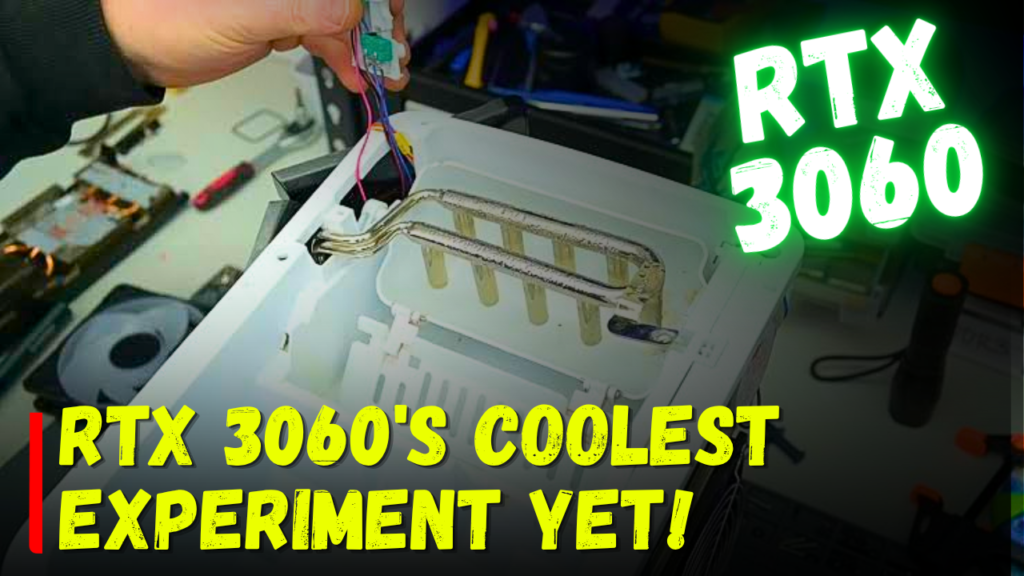
RTX 3060 Used in Ice Cube Maker : A bizarre but fascinating experiment in PC cooling is going viral online when YouTuber TrashBench utilised a modified ice cube maker to cool an Nvidia GeForce RTX 3060. It’s a workshop challenge: take a drinks cooler, attach it to a graphics card and see if you can keep game temps in check. But it wasn’t simply some fast trick. The solution brought the card well below standard air cooled temperatures, attracting interest from PC modders, gamers and hardware enthusiasts that love to see everyday objects turned into extreme cooling devices.

GPU Ice Machine Cooling System
The experiment went to ice machine GPU cooling because TrashBench wanted to test if the machine could actively cool the card, rather than just using a bucket of ice water as a short-lived cooling source. The RTX 3060 was tested first with its stock air cooler, then with a simple water loop and then with the modded ice maker. The card was reported to run at about 22-23 degrees Celsius under load and the hotspot temperature was reduced to about 34 degrees Celsius after the machine was adjusted to keep the compressor running and put the water in contact with the cooling coils.

TrashBench Cools RTX 3060 With Modified Ice Machine
The project began with the removal of the RTX 3060’s stock cooler. They then bolted a bespoke frame over the GPU die to connect liquid-cooling tubing. A small submersible pump was installed within the ice machine, transforming the equipment into an improvised cooling loop. The warm water from the GPU was supposed to go back to the ice maker’s bucket, where the machine would chill it before delivering it back to the graphics card.

It didn’t work perfectly at first. The usual compressor cycle of the ice maker was meant to generate ice, not to handle the continual heat of a gaming GPU. It would turn itself on and off, which meant the water temperature might go up quicker than the machine could cool it down. To get around that, TrashBench installed a replacement thermostat and bypassed the original control system, so the compressor would run all the time.

GPU Stays Under 23°C
The numbers made the experiment stand out. With the conventional air cooler, the RTX 3060 hit about 60°C on the GPU and around 75°C on the hotspot when gaming. A simple system with just water did better, getting the GPU down to roughly 44 degrees, but there was no effective method to keep the water cool over the long term.
After the ice maker was changed, the result was very much different. In Cyberpunk 2077, the RTX 3060 apparently stayed at a temperature of around 22 °C to 23 °C during a test of between 15 and 20 minutes. That’s a massive reduction for a GPU that is generally fan and heatsink cooled. The hotspot temperature also plunged from about 75°C to roughly 34°C. Still, those numbers are more in line with what people expect from a dedicated cooling solution – on a standard graphics card.
A Standard RTX 3060 Becomes a Beast
The RTX 3060 isn’t a flagship card, but it’s popular since it’s efficient, widely available on the used market, and great for 1080p gaming. Its 12GB edition also had a lengthy life among budget gamers and developers thanks to its huge memory. Which makes it an ideal choice for odd experimentation. It’s powerful enough to make meaningful heat but not so pricey that a botched mod feels like you’ve destroyed a high end GPU.
Colder temperatures can assist a GPU maintain higher boost clocks for extended periods of time, especially when the card is working hard. In principle, such a configuration could provide you greater overclocking headroom. But the risks become soon apparent in practice.
Condensation is still the big problem
The major concern was whether the ice machine would cool the card. It sure could have. The main issue was dampness. When water temperature dipped below ambient air temperature, condensation began to occur on the setup. That’s risky for PC parts, as water next to an active graphics card can produce shorts, corrosion, or irreversible damage.
That apparently had to halt one test when moisture accumulated around the hardware. There were additional leaks across the process which made the build extremely riskier. This is why the experiment should be seen as a creative demonstration, rather as a practical cooling guidance. It makes its point, but it’s not something most people should try to emulate.
Why the experiment was noticed
The attraction is obvious. Hardware projects that combine great engineering and a bit of anarchy are right up the alley of PC aficionados, and this one had them both. It took an everyday household item and used it for a different purpose altogether. And it showed obvious, dramatic results: a normal gaming GPU at far below typical temps.
The RTX 3060 Ice Cube Maker experiment probably won’t become a trend in ordinary PC building, but that’s not really the idea. It sticks out for being distinctive, visual, and surprisingly effective. Above all else, it demonstrates the eagerness of modders to test the limits of an idea, even when the end result is both remarkable and a little worrying: yeah, an ice maker can cool a GPU, but no, it definitely shouldn’t be sitting next to your gaming PC.
