
New Smart Glasses From Google and Samsung Surprise Users

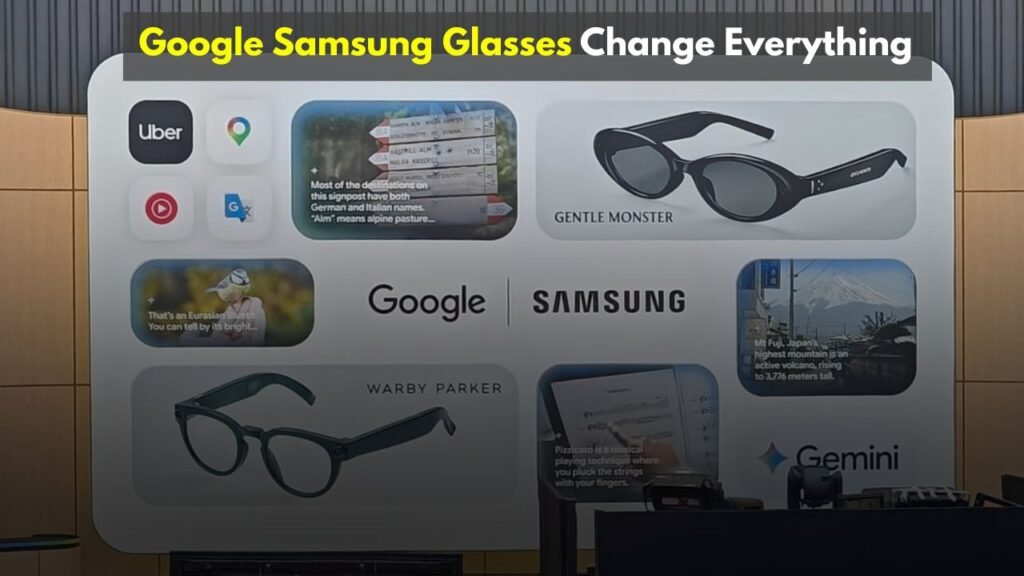
New Smart Glasses From Google and Samsung : Google and Samsung’s new smart glasses are capturing attention because they feel more practical than past wearable tech. These glasses work with Android XR and Gemini AI, so you can ask questions, get assistance, take photos, translate speech, and receive useful information without needing to take out your phone. The surprise isn’t just about the technology but also the design. Google is collaborating with eyewear brands like Gentle Monster and Warby Parker, while Samsung is contributing to the development of the wider Android XR platform. This makes the product appear more like regular glasses and less like a bulky tech device. For many users, the most appealing aspect is support without your hands when on the go, shopping, studying, working, and handling daily routines. The concept is straightforward: put on the glasses, speak naturally, and get smart responses instantly. That combination of style, AI, and comfort has generated a lot of interest across many new global markets.

Main Features of Google and Samsung Smart Glasses
The big reason users are surprised is the smart feature set. The idea is these glasses will serve as a personal AI assistant on your face. Instead of opening up a bunch of apps, users can talk to Gemini and get help quickly. The glasses can understand what the camera sees, help with messages, guide users through directions and support live translation during conversations. This makes them great for people who are travelling, working outside or need quick information on the go. “Design is important too, because nobody wants chunky devices. Google and Samsung want to make smart glasses easy, natural and comfortable to use every day, with AI, camera, speaker, microphone and stylish frames without getting in the way of normal eye contact too much.

- Gemini AI can answer questions in a flash.
- Travel is helped by live translation.
- Camera support may be useful to identify objects.
- Voice control can help cut down phone use.
- They’re easier to wear daily when they’re stylish frames.
How Google and Samsung Are Working Together
Google and Samsung are not treating smart glasses as a single product. They are building a bigger Android XR ecosystem where glasses, headsets, apps and AI can work together. Google is responsible for Android, Gemini, maps, search, translation and developer tools. Samsung brings hardware know-how, device experience, display research and strong consumer trust. This partnership can help developers to create better apps for learning, navigation, entertainment, shopping and work. It also expands the choices available to users since different brands can make different styles of glasses on the same platform. Smart glasses could become as ubiquitous as smart watches if the ecosystem grows well, as people will be able to get helpful information without always having to touch their phones or stop what they are doing in the real world.

- Google has Android XR and Gemini AI
- Samsung backs hardware and device development
- Developers can create applications for the platform
- Improved designs from eyewear companies
- Users may have more product choices later
Why Users Are Surprised by These Glasses
The glasses focus on practical help rather than looks. That surprises users. Past smart glasses can feel expensive, strange or limited. What’s different about this new idea is that it connects AI to everyday actions. They might read a sign and want a translation, enquire about a product while shopping, snap a quick photo, or hear a reminder while walking. Glasses can reduce phone use when your hands are busy. People also like the fact that fashion brands are involved, as style is important for something worn on the face. More people may feel comfortable wearing glasses, which look normal and work smoothly, in public places without feeling awkward or watched or separated from the people they are talking to during conversations.

- The glasses look more modern and wearable
- AI support feels useful in day to day life.
- Hands free help is good for busy users.
- Translation can make travel easier.
- Normal-looking design can increase public acceptance.
Possible Benefits and Challenges
The benefits of these smart glasses are powerful, but questions abound. Users may like fast translation, navigation, photo taking, reminders and AI answers. Students can use them to improve learning, workers can check information more quickly and travellers can understand places more easily. But privacy, battery life, price, comfort and public use of the camera will all matter a lot. Clear privacy lights and controls are important as people may worry they are being recorded. The battery should also be good enough for day to day usage. If Google and Samsung can get these issues right, the glasses can be a useful wearable and not just another cool tech demo that is interesting on the web but hard to use in real life for people.
- Benefit: Instant answers, no phone required.
- Benefit: More work and travel support.
- Challenge – Privacy problems in the public space.
- The Challenge Battery life needs to be good
- Challenge – Price should be user-friendly
