
Kroger to Acquire Giant Eagle in $1.65 Billion Deal to Expand Grocery Business

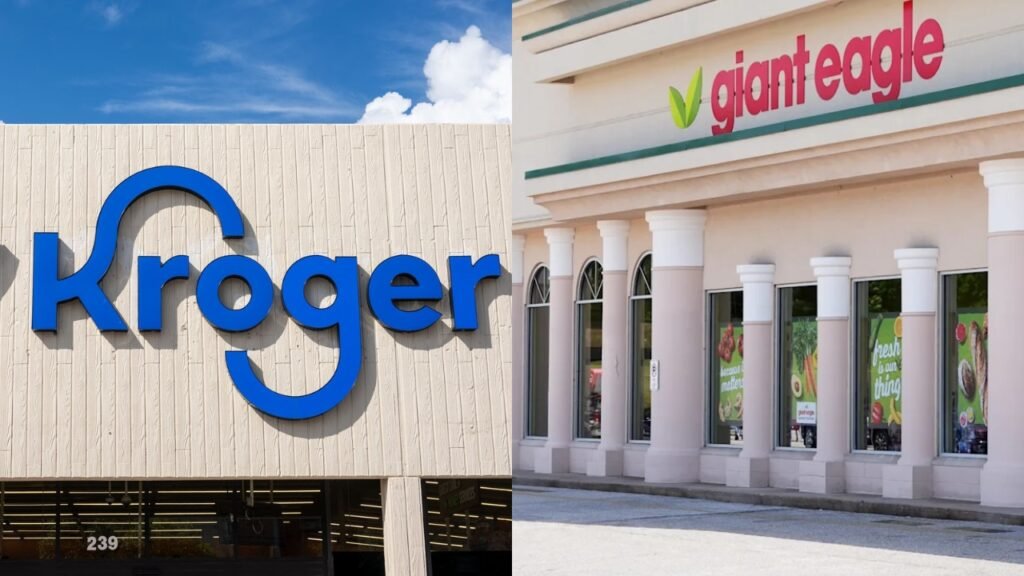
In a huge strategic move for the retail industry, Kroger to Acquire Giant Eagle in $1.65 Billion Deal agreement to grow its food operations. The country’s largest traditional supermarket operator enters a new chapter in a cash-heavy deal announced July 1, 2026. This move is a hint to investors and readers of a new push for consolidation in the region and aggressive moves into the market following past regulatory failures.
Recent Financial Update & Strategic Shift
The overall purchase price of $1.65 billion consists of $1.25 billion in cash plus the assumption of about $400 million in liabilities. The deal is the first large transaction under Kroger CEO Greg Foran, who took over in February 2026. The deal provides Kroger an escape from its $25 billion mega-merger with Albertsons that failed in late 2024 owing to strong federal resistance.
Giant Eagle brings tremendous regional strength to the table. The privately held chain has almost $9 billion in annual sales. It has 197 supermarkets and 11 stand-alone pharmacies in Ohio, Pennsylvania, West Virginia, Maryland and Indiana.
Financial Summary and Deal Mechanics
Kroger plans to fund the deal entirely with cash. The company promised shareholders that its net total debt to adjusted EBITDA ratio will remain within the target 2.3 to 2.5x range.

Additionally, management anticipates to uphold its present quarterly dividend and to proceed with its already sanctioned $2 billion share repurchase programme. But the company emphasised that the acquisition will only be accretive to adjusted profit in the second full year after the deal closes.
Market and Investor Reactions
The operational gains were evident, but the market’s initial reaction was cautious. Shares of Kroger were off nearly 3% in premarket trade on the news. The key issue for investors is the short-term integration costs and longer runway for real earnings growth.
Retail analysts, meanwhile, have been very supportive. Industry analysts have termed the acquisition a strategic masterstroke, pointing out that the older, loyal customer base of Giant Eagle has been very durable throughout economic downturns.
What It Means for Investors
In the short term shareholders need to be patient as management deals with the purchase costs and the integration phase. A major risk aspect is the lack of immediate earnings accretion.
The longer-term picture is significantly more encouraging. Mid-Atlantic and North-east gateways, Kroger can utilise its huge supply chain to cut prices for consumers. That scale is important in defending market share from discounters like Walmart and Aldi.
What’s Next on the Regulatory Front?
The transaction is expected to close in 2027, subject to customary closing conditions and regulatory approvals. Kroger and Giant Eagle aim to sell some of their stores to avoid antitrust problems. Analysts say the regional transaction won’t face the same heated government resistance that killed the Albertsons merger.
Sources
Kroger IR
Disclosed the $1.65 billion transaction value, $2 billion buyback continuation, and 2027 closing target.
AP Business
Highlighted Greg Foran’s role as new CEO and detailed the history of the scrapped 2024 Albertsons merger.
Investing.com
Tracked the 3% premarket stock drop and reported that the deal will be earnings accretive in year two.
IndexBox
Confirmed Giant Eagle’s $9 billion annual revenue and its 197-store footprint across five states.
