
Amazon launches new warehouse robot as AI layoffs continue at major tech companies

 Roku Increases Streaming Hardware Prices Again With New Lineup Changes Affecting Millions of Users
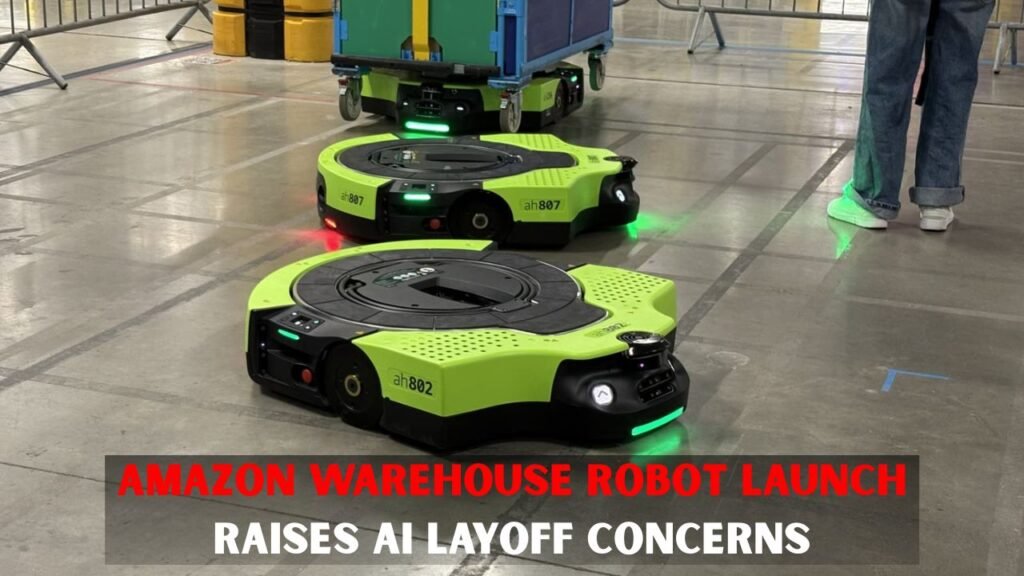
Amazon has introduced a new AI-powered warehouse robot as many tech firms are cutting jobs and increasing spending on automation. The robot is an enhanced variant of Proteus, which is able to understand simple voice instructions, plan its own path, select tasks and transport goods within fulfilment centres. This is how fast A.I. is taking over real work spaces, not just software offices. Amazon says the robots are there to help workers, make things safer and get the deliveries faster. But the launch also poses a serious question: What is the future for human jobs if machines can do more jobs in warehouses and offices? Layoffs in the tech industry are being blamed on cost cutting, investment in artificial intelligence and evolving business needs. The news is important because it raises three big issues — robots, artificial intelligence and the future of work for workers everywhere. It also explains why workers will soon need new digital skills.”

What can Amazon’s new robot do?
Amazon’s new warehouse robot is not just a machine that moves. It employs AI to understand natural language instructions from workers and figure out how to do a job safely. Proteus upgrade lets it plan routes, prioritise work and move containers around busy warehouse spaces. Why does this matter? Older robots usually worked in fixed zones and needed less restrictive commands. Better AI can make the robot more flexible and useful in more parts of a fulfilment centre. Amazon is also testing STARK for tote handling and Vulcan for touch-based work. Together, these machines provide a glimpse into the future of faster, smarter, more connected warehouse operations, where human workers handle exceptions, safety and complex decisions, all under trained human supervision.

- It can understand basic voice commands.
- It can plan warehouse routes more safely.
- Heavy container can help to move.
- It may help to get the orders through quicker.
- It can communicate with other robotic systems.
Why this launch matters amid AI layoffs
The launch comes at a sensitive time for many tech companies, which are firing staff while increasing spending on AI. And some divisions, such as Amazon’s robotics division, have also experienced cuts this year. Companies say the moves help them control costs and to invest in future technology. But workers fear that automation will reduce the number of jobs available or change the requirements of jobs too fast. The truth is murky. AI can take over repetitive tasks, but it can also create new jobs such as robot maintenance, data monitoring, safety control and AI training. The key issue is whether companies will give employees the chance to learn these new skills before the old jobs become obsolete. This is therefore very important that everybody is having fair planning, retraining and communication.

- AI investment is accelerating rapidly.
- Some jobs will evolve or vanish.
- There could be new technical jobs too.
- Support for upskilling needs to be adequate for workers.
- Companies need to communicate changes well.
Effect on Warehouse Employees
New robot might be a help , and pressure , for warehouse workers . In one way robots can help reduce repetitive physical strain, carry heavy loads and reduce the risk of some injuries. They can also help speed picking, packing, and delivery in busy seasons. On the other, workers may be monitored, replaced or forced to adapt with little support. In the best case, companies will treat robots as tools, not simply as replacements for people. Workers will need training in operating machines, safety checks, problem solving and basic digital systems. Managers also need to understand how automation changes roles, schedules, targets and promotion paths. Without this support, trust between the employees and the company can erode more quickly in the face of rapid change.
- Robots can relieve heavy physical labour.
- Workers may need to learn new skills for the machine.
- Safety training will be more important.
- The positions may get more technical.
- Clear policies of the company can help to reduce fear.
Automation and the future of tech jobs
That means the future of tech jobs is not just about coding. It will also cover how to work with AI systems in real industries such as retail, delivery, logistics, healthcare, and manufacturing. Employees who understand robots, data, safety, customer needs and teamwork are going to have more value. Judgement, creativity, repair, ethics, planning and human contact will still require people. And simple, repetitive tasks may yet shrink. That means workers should focus on gaining skills that machines can’t easily replicate. Governments, schools and companies should also support reskilling programmes, because automation can only create opportunity when humans are ready to make good use of it. So the robot launch is a lesson and a warning to workers everywhere.”
Conclusions Summary
Amazon’s new warehouse robot is a major sign of how quickly AI is changing work. The robot might bring safety, speed and efficiency to warehouses, but it comes amid tech layoffs. The essential question is not whether robots are good or bad. The important question is how they are being used by companies. Automation can help people when combined with honest communication, training for workers and fair job planning. And without that balance, it can create fear and job insecurity for many workers and families across the board.
