
Sony Future Filmmaker Awards announce 2026 winners in all categories list

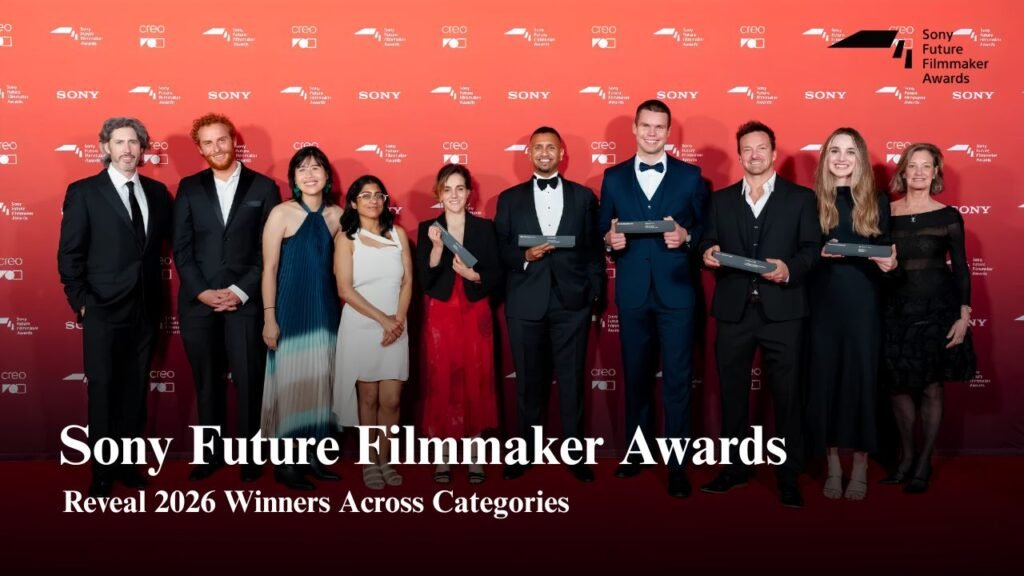
The Sony Future Filmmaker Awards 2026: winners have been revealed, and the announcement has made the film world lean forward. At a gala ceremony inside Sony Pictures Studios in Culver City, five emerging filmmakers moved from shortlist names to global talking points. The awards, now in their fourth edition, were created by Creo and sponsored by Sony to give short-film creators a bridge into the industry.

This result is not just another winners list. It is a snapshot of where new cinema is going: intimate stories, sharp personal stakes, animation with bite, student work with emotional tension, and a future-format winner built around restraint rather than spectacle. The competition drew entries from more than 8,400 filmmakers across 162 countries and territories, before narrowing to 30 shortlisted films from over 20 countries. That scale makes the final five feel like signals from a wider creative shift.

The Night in Culver City Where Five Short Films Changed Their Makers’ Futures
The ceremony was hosted by Emmy-award winner Denny Directo in the Scenic Arts Building, a fitting place for an event built around craft. For filmmakers working with limited money, borrowed time, and stubborn belief, the room represented more than applause. It was access. The winners were celebrated for completed films and introduced to mentors, executives, and peers who can help turn short-form promise into long-form careers.

Before the table, remember what these categories are doing. Fiction remains the home of dramatic storytelling, Non-Fiction rewards documentary truth, Animation opens space for visual invention, Student protects the energy of early voices, and Future Format looks toward new cinematic language. Together, they map modern filmmaking, where a strong idea can arrive from anywhere and command attention.

Why the Sony Future Filmmaker Awards 2026 Winners List Has People Watching Closely
Jack Hughes won Fiction with Deadheading, a story that appears small on the surface but carries a bruising emotional hook. It follows an older couple facing illness, postponed dreams, and the strange urgency that arrives when time suddenly becomes visible. That kind of premise can easily become sentimental, but its recognition suggests the judges responded to controlled feeling, not melodrama.
Christine Seow’s Two Travelling Aunties took Non-Fiction, and its victory feels resonant. The film follows two Singaporean women in their fifties who choose van life, freedom, and love on their own terms. It is a road story, but also a portrait of courage inside a society where queer lives are often negotiated quietly. The win gives documentary audiences a reminder that tenderness can be political without shouting.
Two winners especially show how personal subjects can become cinematic pressure points:
- Ovary-Acting by Michelle Brøndum and Ida Melum turns reproductive anxiety into bold animated comedy, using absurdity to reach an honest question.
- Norheimsund by Ana A. Alpizar explores distance, desire, and vulnerability through a Cuban girl’s complicated romance with an older Norwegian man.
- Creating Without Permission by Innocent Yama Lamido proves that quiet images and minimal dialogue can still carry emotional force.
Animation winner Ovary-Acting may become one of the most discussed titles because its concept lingers. A woman at a baby shower unexpectedly confronts her reproductive organs, turning a private question into a surreal public reckoning. The film’s success points to a wider appetite for animation that is adult, funny, uncomfortable, and precise.
The Hidden Pattern Behind Fiction, Documentary, Animation, Student, and Future Format Wins
Look across the five winners and a pattern appears. These films are not chasing blockbuster scale. They are chasing pressure: the pressure of illness, identity, biology, fantasy, migration, silence, and permission. The strongest emerging filmmakers seem less interested in polishing the obvious than catching the moment when ordinary life tilts.
For readers following the Sony Future Filmmaker Awards all categories list, the meaning is clear. A winner can come from the United Kingdom, Singapore, Denmark and Norway, Cuba, or Nigeria, yet still speak to viewers who have never visited those places. That is the magic of short cinema. In fifteen or twenty minutes, a filmmaker can build a world, break a heart, and leave behind a question that refuses to fade.
This 2026 edition may stay in industry conversations longer for a few reasons:
- The winners balance social relevance with character-led storytelling, keeping issues grounded in people rather than slogans.
- The shortlist came from a vast international field, which makes the final selection feel globally tested.
- The program places winners close to Sony Pictures Studios, turning recognition into practical professional exposure.
The Student win for Norheimsund matters because student awards often reveal filmmakers before the industry knows how to name them. Ana A. Alpizar’s story of a girl, her mother, and a long-distance promise hints at the danger of dreams that arrive dressed as rescue. The premise understands how hope and manipulation can share the same doorway.
Future Format winner Creating Without Permission stretches the idea of what a category winner can be. Rather than leaning on loud innovation, Innocent Yama Lamido’s film trusts stillness, gesture, and atmosphere. That choice feels almost defiant in a digital culture obsessed with speed. The title itself suggests the deeper theme of the awards: new filmmakers create before anyone gives approval.
What Comes Next After the Sony Future Filmmaker Awards 2026 Winners Are Named?
The winners list is now public, but the more interesting story begins after the ceremony. Awards can open doors, yet careers are built by what filmmakers do once the lights go down. For these five winners, the 2026 announcement is a calling card and proof point. Watch the short films, because one of these names may be attached to the feature, series, or cinematic voice everyone claims they discovered early.
