
Aurora forecast shows more states may see strong geomagnetic storm lights

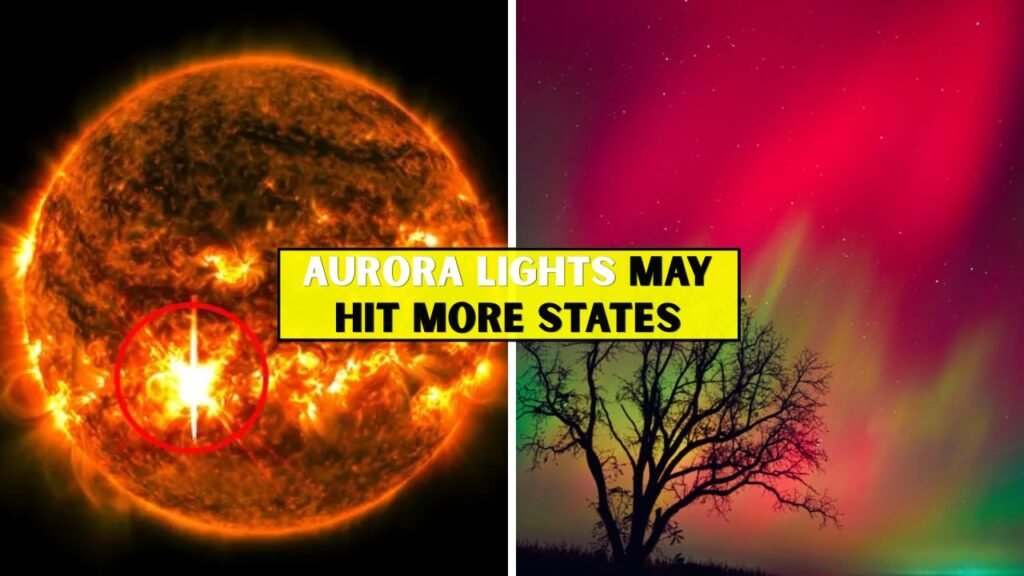

Why are there more states in the forecast for Aurora?
The aurora forecast is also watching, since strong geomagnetic storm activity can push the northern lights further south than usual. Solar particles can interact with Earth’s magnetic field when they are charged, creating colourful lights over areas that seldom see them, giving more states a chance to view the natural sky show.
- Auroras can be seen further away with solar activity.
- The clearer the skies, the better your chances of seeing lights.
- Darker sites are better conditions for viewing.
- Solar wind speeds and forecasts can change rapidly.
How strong is a geomagnetic storm?
When the sun throws off energy that interferes with Earth’s magnetic field, it creates a big geomagnetic storm. These storms are generally tied to solar flares or coronal mass ejections. Most storms are harmless to the casual observer, but more powerful events produce brighter auroras and can sometimes affect satellites, radio signals, GPS and power systems.
Best Places To See The Northern Lights
The chances are best in the northern states, but a stronger storm could light up parts of the central United States. It’s most likely to be seen in states near the Canadian border, but stronger activity, clear skies, low light pollution and an open northern horizon are needed further south.
- The safest bet most of the time is the northern states.
- Intense storms can produce faint aurora displays in the Central States.
- Better in rural locations than in the city.
- The display can be totally obscured by cloud cover.
When’s the Best Time to Watch?
The best time to watch is often late evening to early morning, especially around local midnight. Be patient; auroras could come and go and then come back again. Timing will depend on the strength of the solar wind and the Earth’s magnetic response, so viewers should check for updates before heading out.
Can You Increase Your Visibility?
You’ll have better luck in a dark spot away from streetlights, buildings and heavy traffic. Look north and let your eyes get used to it. Sometimes auroras are faint to the human eye but will appear brighter in photos taken with your cell phone or camera with night mode or long exposure.
- Go out into a dark country.
- Look north at the horizon.
- Allow 20 minutes for night vision.
- Use a tripod for better photos
- Before going out, look for clouds.
Why Aurora Forecasts Can Change Quickly
Space weather is very dynamic, and predictions of aurora can change very quickly. “Small changes in solar wind speed, density, and magnetic direction affect where the lights are. A forecasted state doesn’t guarantee auroras but it does mean conditions could be ripe for a surprise display somewhere nearby.
Are geomagnetic storms dangerous?
Most people on Earth watching from there are not in danger from geomagnetic storms. The aurora is a wonderful light show high in the sky. But big storms can cause technical trouble. So scientists and agencies watch space weather closely and issue warnings when things get out of hand.
- Skywatching is usually safe.
- More powerful storms could mean more monitoring of power grids.
- GPS accuracy can be affected at times.
- Radio communications may be temporarily affected.
What Can Skywatchers Do Now?
Even so, skywatchers should still check the latest aurora forecast, weather conditions and local cloud cover before setting out. If the weather looks good, bring warm clothes, a charged phone and a camera. Dim lights can still make for a memorable night with a clear dark sky.”
Can phones take better pics of the aurora?
Yes, a lot of modern phones can capture auroras better than the naked eye can see, especially in faint displays. If you use night mode and long exposure and hold your phone steady, you can see green, red or purple tones. Don’t zoom in. Keep the phone steady and take multiple photos over time for best results.
- If possible, please use night mode.
- Keep the camera level.
- Stay away from bright lights in the area.
- Fires at intervals of a few minutes.
What’s so special about this aurora event?
The forecast is noteworthy because it provides people outside the usual aurora zones an unusual opportunity to see the northern lights. It also shows the public how active the sun can be and why monitoring space weather is important. For many, it will be a skywatching event that comes but once in years.
The latest aurora forecast indicates that more states may also see intense geomagnetic storm lights if conditions remain favourable. The best thing to do is simple. Watch the official updates, get somewhere dark, look north and be patient. Northern lights are not reliable, but that element of surprise is part of their appeal.
