
US DOJ Warns Milwaukee City Hall Over ICE Mask Ban as Legal Dispute Escalates

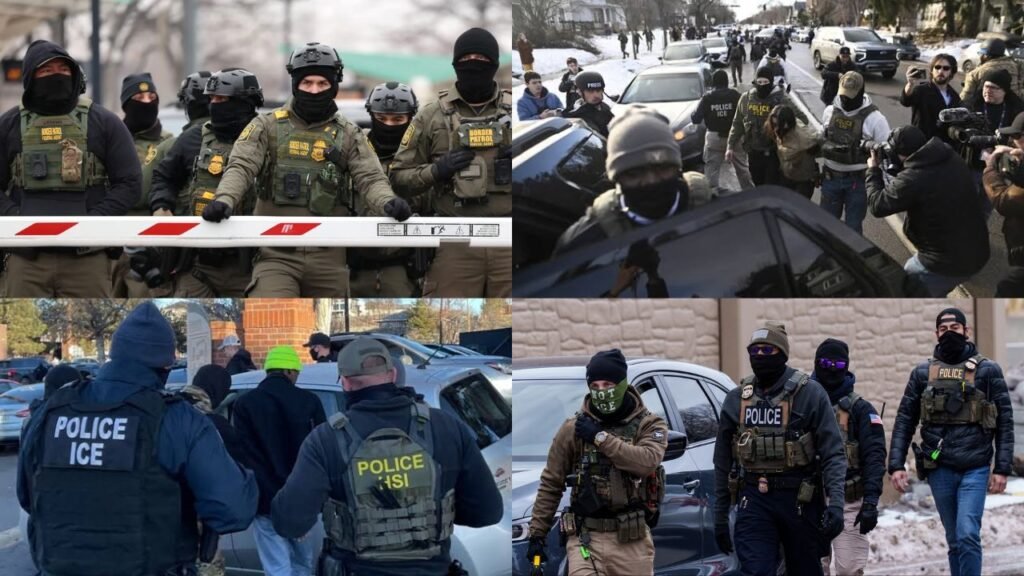
US DOJ Warns Milwaukee City Hall over ICE mask ban disagreement The US Department of Justice (DOJ) has warned Milwaukee City Hall that the city’s attempt to prohibit facial coverings worn by immigration enforcement officers has escalated into a legal battle. The warning has ignited a new legal fight over whether local governments may regulate federal agents and could affect similar issues elsewhere.
 Social Security Benefits Taxation Guide 2026 Explains Federal and State Tax Rules for Retirees
Milwaukee ICE Mask Ban Dispute
The Justice Department has told Milwaukee officials it believes the city’s statute targeting masked federal law enforcement agents is unlawful. Federal officials claim local governments have no right to tell federal agencies how to run their operations.

Milwaukee’s policy is part of the city’s broader ICE Out package, including identification requirements and transparency measures during immigration enforcement efforts. Officers functioning in an official capacity cannot wear masks or face coverings under the city’s laws, which include specify agency identification and other visible information.

The DOJ’s approach follows similar legal challenges to other jurisdictions that approved similar limitations. Such restrictions might conflict with federal responsibilities and create safety risks for police, the department has said.
 US Department of Energy Issues Emergency Orders to Protect the Power Grid During Peak Demand
Legal background and the main issues
The issue is a continuing tension between local governments demanding greater transparency in the immigration enforcement process and federal officials who want to preserve their operational power.
Milwaukee officials announced the ICE Out plans after worries about federal immigration operations and the usage of masked personnel. Supporters of the ordinance claimed the identification requirements could assist residents know which agency is taking enforcement measures.
Public and Expert Reaction
The discussion in Milwaukee has drawn passionate reactions from both supporters and opponents. The ordinance’s supporters say visual identification could increase public confidence and accountability when enforcement actions are implemented.
Those opposed say that forcing federal officers to remove their face coverings could raise security concerns, especially for agents who may be threatened due to their association with immigration enforcement activities.
Legal analysts following similar instances have focused on the larger constitutional question of how far communities can regulate actions carried out by federal agencies. Recent court rulings in other jurisdictions show that federal authority will continue to be a significant issue in these debates.
Courtroom Battle Has Broader Implications
The Milwaukee case might become part of a bigger national discussion about immigration enforcement, government power and public disclosure.
If federal courts ultimately find in favour of the DOJ’s claim, communities could be constrained from enacting policies that directly affect federal officers. If local governments win, other towns could pursue similar accountability measures.
The result also might affect relations between federal immigration officials and communities that have raised concerns about enforcement procedures.
What’s Next for?
The legal argument unfolds as Milwaukee officials are anticipated to reply to the Justice Department’s warning. What happens next could be discussions, more federal action or judicial battles over whether the ordinance can be enforced.
Similar cases around the country will likely provide key legal advice as the courts continue to deal with the balance between federal immigration authority and state government responsibilities.
Sources
- Department of Justice – Official declarations, including legal arguments, on government power over immigration enforcement operations.
- Milwaukee – Ordinance specifics, objective of legislation, and ID requirements under the ICE Out package.
- WISN – Local coverage of the ordinance’s passage by the council and its communal impacts.
- Reuters – Local coverage of the ordinance’s passage by the council and its communal impacts.
- The Associated Press – Legal framework based on prior federal challenges to municipal prohibitions on disguised federal officials.
