
Tesla Cybercab Enters Mass Production Even Though It Still Can’t Drive Itself

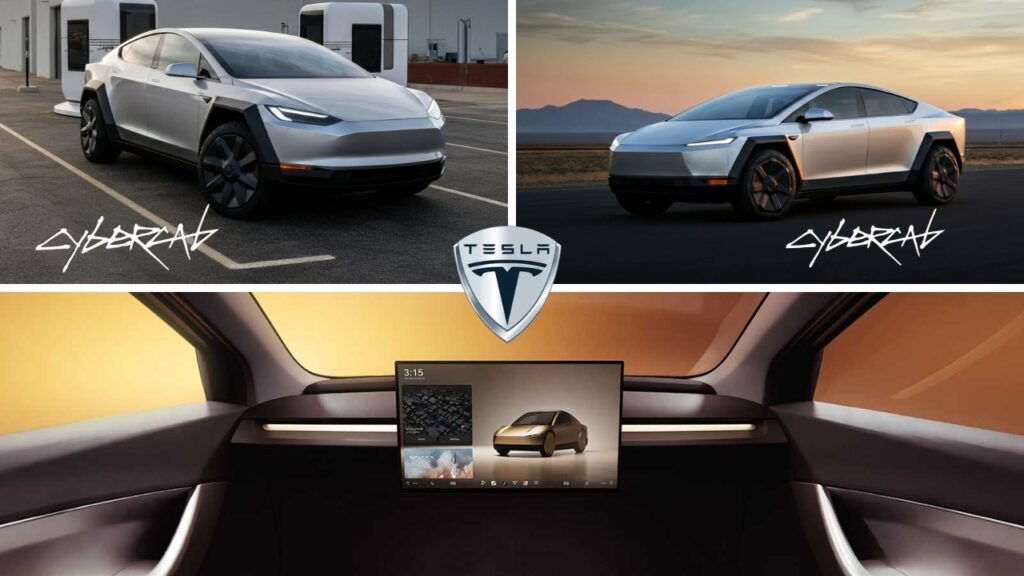
Tesla Cybercab is in mass production now, which is one of the biggest manufacturing milestones for the company in years. But there’s a big caveat to the headline: the purpose-built robotaxi can’t yet operate as a fully autonomous vehicle without further testing and safety validation. The real barrier to wider commercialisation is not the cars but Tesla’s autonomous driving software. Gigafactory Texas is getting up to speed on production.
So How Does the Tesla Cybercab Compare with Other Tesla Vehicles?
The Tesla Cybercab was purpose built as a robotaxi, unlike the Model 3 or Model Y. The two-seater doesn’t have a steering wheel or pedals, as it’s only supposed to be driven with Tesla’s Full Self-Driving technology. Tesla has already begun engineering testing of production vehicles on public roads in Austin, Texas, but the company still does supervised validation before scaling up. It’s a design that reflects Tesla’s long-term vision of autonomous transportation rather than car ownership.

Why can’t the Cybercab drive totally on its own yet?
Production is picking up, but Tesla says the bottleneck is still validating its autonomous software. CEO Elon Musk has sounded a more cautious note recently on the robotaxi rollout. Safety testing has to come before the big rollout, he said. Current robotaxi operations are limited to well-mapped service areas and Tesla is still working on honing its next generation Full Self-Driving software before releasing it more broadly. Analysts say that commercial roll-out of the Cybercab will ultimately be driven by regulatory approval and proven real world performance.
What Mass Production Means for Tesla’s Future?
Tesla can start building its manufacturing capacity while still working on its software by beginning production sooner. The company seems to be betting that the autonomous technology will be ready before many Cybercabs are needed in commercial operation. If Tesla can demonstrate its software is valuable and get regulatory approvals, it could quickly scale up its robotaxi service using cars it already manufactures. But production alone will not lead to widespread deployment until autonomous performance can reliably meet safety expectations.
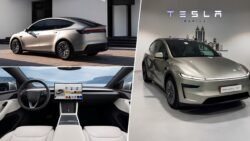 Tesla Model Y L Launches in US With Six Seats, 325-Mile Range, and Starting Price of $61,990
How does Tesla compare to other robotaxi companies?
Tesla enters this phase while competitors are still working on their own autonomous services. Tesla’s robotaxi programme is still fairly small, while Waymo and others are already operating much larger fleets of driverless vehicles in a handful of cities. Tesla is ahead of the pack in terms of the scale of its manufacturing and the integrated production of the vehicle itself, but the company’s long-term success will depend on its ability to safely operate its camera-based autonomous system at scale under regulatory oversight.
Sources
- Electrek– Reported that Tesla has entered Cybercab mass production, production timeline, manufacturing progress, and software limitations.
- Reuters- Reported Elon Musk’s updated timeline, safety-first approach, and slower robotaxi rollout strategy.
- TechCrunch- Confirmed public-road testing of production Cybercab vehicles in Austin with passenger supervision.
- Investor’s Business Daily– Added context on Tesla’s robotaxi expansion and how it stacks up against Waymo.
