
Smart Glasses Could Challenge Apple’s Vision in Wearable Tech

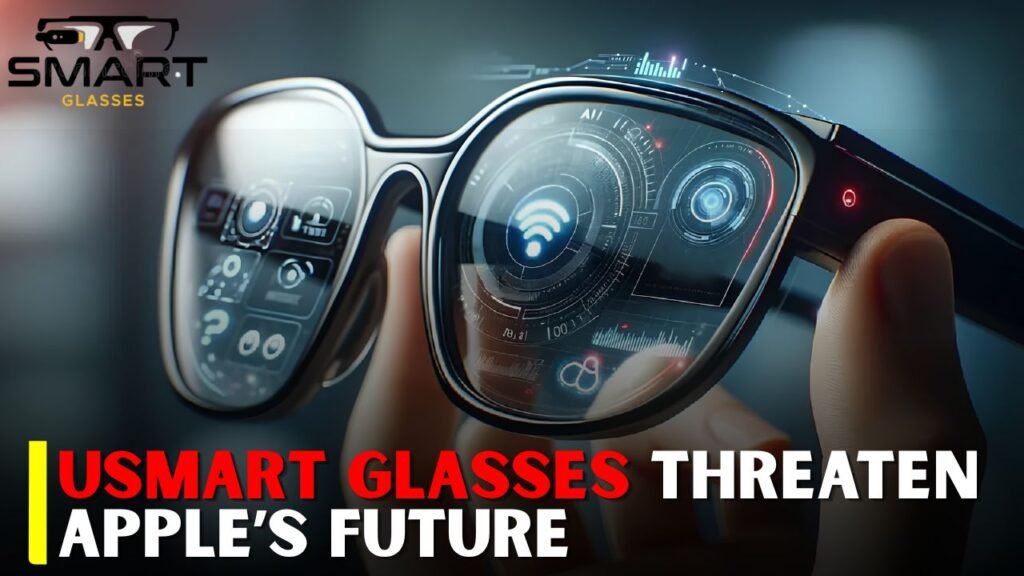
Smart Glasses Could Challenge Apple’s Vision : Wearables are entering a new phase, and the next big change probably won’t come from a clunky headset. Maybe just a pair of normal-looking spectacles. Apple’s Vision Pro demonstrated the potential of spatial computing, but also highlighted a significant issue: advanced mixed-reality hardware remains pricey, cumbersome, and challenging to use in everyday life. Smart glasses are attempting another approach. They’re lighter, more familiar and simpler to wear in public. That makes them a real threat to Apple’s vision of the future of computing.
AI Smart Glasses
The reason AI smart glasses are becoming increasingly useful is because they focus on routine daily tasks. They can snap images, record brief films, translate speech, give directions, read text, answer queries and hook up with voice assistants. Instead of asking customers to enter a totally immersive digital world, they are bringing little pieces of technology into real life. This is significant because most people don’t want to wear a big headset for lengthy periods of time. They want technologies that integrate into their routine without sticking out too much.

Why Smart Glasses Are Making A Comeback
The primary advantage of smart glasses is convenience. While Vision Pro is a strong headset, it’s not something most users will be wearing whether they’re walking outside, shopping, travelling or seeing friends. Smart glasses appear far more like conventional spectacles. Which makes them easier to accept.

Price is another big one. Apple’s Vision Pro is a premium product. Designed for premium experiences such as spatial video, immersive entertainment, productivity and design work. Smart glasses are typically more affordable and functional. This provides them a larger audience. People may be reluctant to spend big on a headset, but might be more willing to buy smart glasses if they perceive the price is similar to a phone accessory or a pair of luxury headphones.

The Apple Vision Pro Challenge
The Apple Vision Pro is one of the most sophisticated wearable devices out there. Sharp screens, precise hand and eye tracking, and robust connectivity with Apple’s ecosystem. Still quite amazing for people looking for a quality mixed-reality experience.
But Apple has a hurdle getting this technology to the masses. The Vision Pro requires users to adjust their behaviour. They have to put a big device on their face and interact with digital windows in a new way. That is OK at home, in offices or for specific professional work. It is less natural in the public settings.
Smart glasses don’t require the same amount of devotion. They feel more like an extension of your smartphone. This tiny shift might help them get to everyday consumers faster.
The Role of AI in Daily Wearables
Artificial intelligence is changing the capabilities of smart eyewear. Previous iterations of smart glasses were sometimes labelled as cameras on your face. This limited their popularity and caused privacy issues. The newer models are more like personal assistants.
AI can recognise voice commands, describe the environment, translate conversations and enable people take action without having to reach for their phone. You can ask the glasses to identify a product, for example, or summarise a sign, or capture a scene, or give walking directions. These are hardly spectacular traits by themselves, but they are useful. This is what gives them their strength.
The future of wearable tech is not the great visual impacts but is about silent help. Smart glasses fit the bill nicely.
Privacy & Social Acceptance
Smart glasses still have a ways to go. The major one is privacy. People may not be OK with glasses with microphones and cameras built in. Companies will need to put up clear recording notices, have good privacy controls and use data in the right way. If that trust isn’t there, smart glasses could suffer the same social backlash as early attempts at connected eyewear.
Design is important too. If people are going to wear a device every day, it has to look beautiful. That’s where the collaborations with eyeglass brands come in. “Tech businesses know software, but fashion companies know fit, style and comfort. Smart glasses are not going to work because they are smart. They want to feel normal too.
What’s Next for Apple?
This shift is unlikely to be ignored by Apple. The company’s already got a hold on wearables with the Apple Watch and AirPods. It has the chips, sensors, software and ecosystem to produce lighter devices over time also. It’s not about whether Apple can compete. The question becomes when it can build a wearable technology that seems natural enough to wear everyday.
Apple’s upcoming smart glasses might incorporate Siri, Apple Intelligence, cameras, navigation, calls, notifications and spatial elements in a much lighter form factor. If Apple can achieve that while also protecting privacy and making the design attractive, it might take back control of the discourse around wearable electronics.
Closing remarks
Smart glasses are not yet there performance-wise to replace the Apple Vision Pro. They aren’t able to deliver its immersive display or full spatial computing experience. But perhaps they won’t need to. Their power is their convenience. They are lighter, simpler, and more in line with how people are already living.
Apple’s Vision Pro is a daring vision of the future. One practical example is the smart glasses. In consumer technology, pragmatism frequently wins out first. Smart glasses, if they keep developing, might be the wearable that brings AI and spatial computing to the masses before Apple’s headgear vision ever gets going.
