
Meta Smart Glasses App Raises Privacy Questions

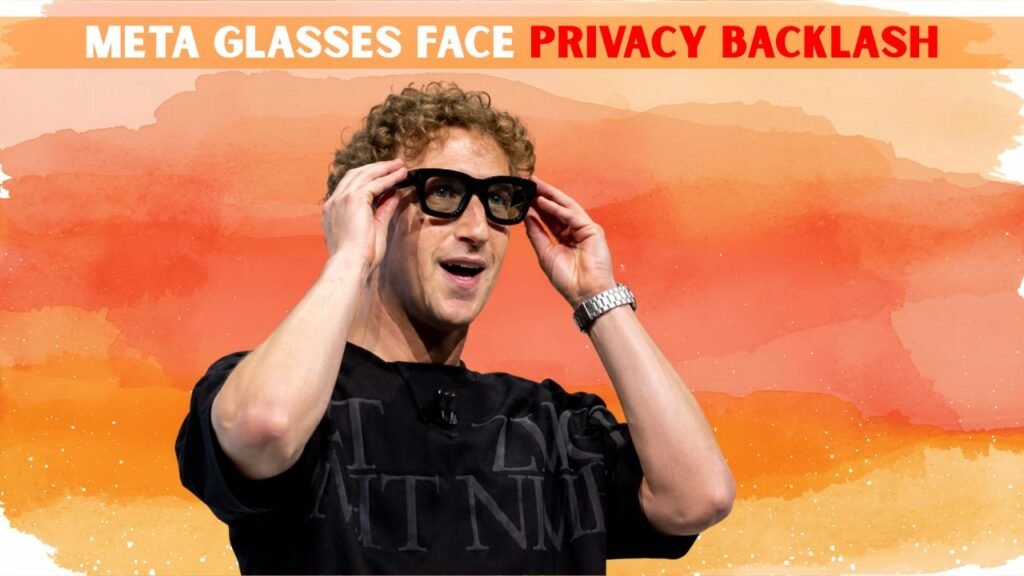
Meta Smart Glasses App Raises Privacy Questions The device brings a camera, microphone, AI assistant and mobile app extremely close to day to day life. These glasses can take photos, videos, voice commands and details about the surroundings in a way that feels natural for the wearer but not clear for people nearby. Privacy concerns are heightened when users are not fully aware of what data is collected, where it is stored, how long it stays there, and if it may help improve AI systems. Meta says users get privacy controls, device settings and visible recording signals, but critics worry about bystander consent, sensitive places and possible future features such as face recognition. This isn’t a debate over an app or a product. It’s about how wearable technology should respect personal space, protect private moments and retain public trust while still providing useful smart features for everyone in homes, streets, schools and workplaces.

Why Privacy Questions Are Growing
The problem with privacy is that recording with smart glasses is less obvious than with a phone. Usually a phone is raised for a quick glance. They sit on your face, look like regular glasses, and can capture what you see with little movement. The connected app adds another layer, as it can control media and AI requests, device settings and account data. People want to know what is stored locally, what is sent to servers, and what is used to improve products. The main problem is that bystanders can be photographed, filmed or recorded without their consent. That is why transparency, consent and strong privacy design is more important than ever for users, families, businesses and regulators.
 Apple iPhone 18 Pro Max Price Could Reach a New High as Buyers May Need to Save More Than Ever
- Smart glasses can record at eye level of the user.
- People nearby are unlikely to notice a short recording.
- The app could handle media, settings and AI requests.
- Consent may be inferred.
Meta’s Privacy Controls and Public Doubts
Meta says the smart glasses come with privacy controls, a power switch, app controls and a capture LED that shows when recording is happening. It also tells users to turn the glasses off in sensitive places and to respect people who do not want to be photographed or recorded. These are good protections, but many question if they are enough. A little light can be lost on a busy street, in a quiet office, in a dark room. Some of the bystanders may not know what the light is for. The app also raises questions about AI voice data, shared media and optional data to improve. Good privacy is simple controls plus public understanding before such devices are used by millions of people in everyday places.

- The capture LED should be simple for others to understand.
- The power switch is useful for private or sensitive locations.
- App settings should be clear about the data sharing options.
- People should be aware when AI features are using their data.
- Privacy controls should be visible, trusted and easy to use.
Face Recognition and Future Data Risks
The biggest concern is not only the recording feature today, but what comes next. Meta has said it is not building a central face database and that no final consumer feature has shipped, though reports have said Meta explored face-recognition abilities for smart glasses. But the idea has privacy advocates worried, because face recognition can connect faces in public to names, and make strangers feel like they’re being watched. Wearable AI can also gather context, such as locations, conversations, documents and habits. If rules are weak, useful features can be used for tracking. Companies need to explain their future plans early, not after users have come to rely on the technology and after communities have accepted quiet cameras around them every day.

- Face recognition can recognise people without normal communication.
- Biometric data is more sensitive than regular photos.
- Future features should be explained prior to launch.
- Users need to be able to opt-in, not be confused by defaults.
- Strong rules can prevent good tools from becoming surveillance tools.
Simple Steps to Use the Glasses More Safely
And to reduce risk for users, smart glasses should be treated like a camera, not normal eyewear. Before recording they should think about the place, the people around and the kind of information that will be in the frame. In private spaces, a short video can expose faces, addresses, screens, medical details, children, personal conversations, and more, so extra care is needed. Make sure to check app settings regularly, especially data sharing, cloud backup, voice history and AI improvement options. Users should also delete unwanted media and update the app for security patches. Responsible use isn’t just about rules. Responsible use is about respecting the people around you so that trust can grow in new technology, not fall behind in public life today.
Final Words
Meta’s smart glasses reveal the promise of wearable AI to be thrilling and tender. These devices can help users capture moments, translate speech, answer questions, and be hands free, but they also raise serious questions about consent, data use, and covert recording. It is a way to balance. Meta must be transparent about its controls, be truthful about how it handles data and better protect bystanders.
