
ECB raises interest rates by 25 basis points to fight rising inflation concerns

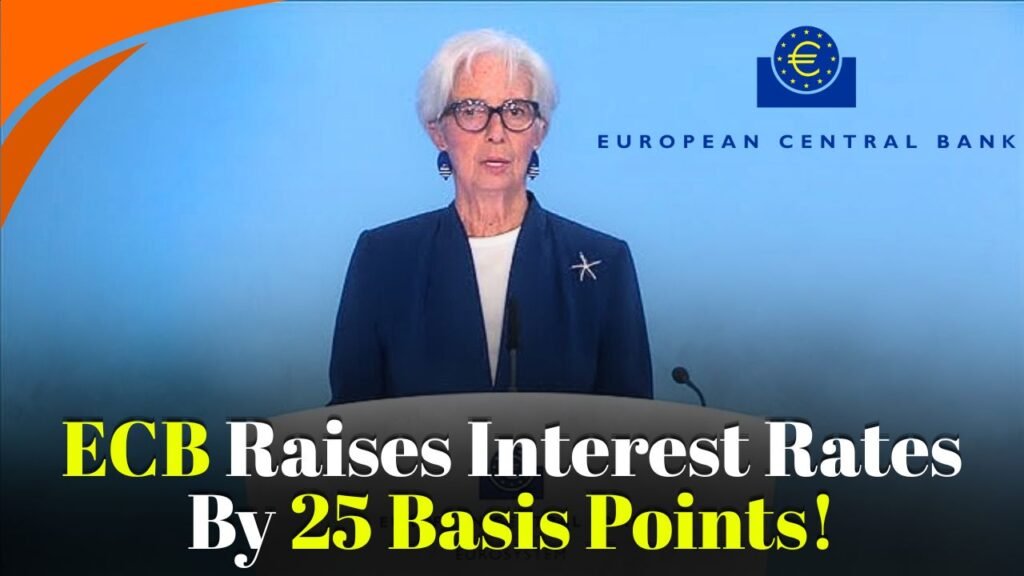
ECB raises interest rates : The European Central Bank (ECB) has lifted its key rates by 25 basis points as officials seek to rein in inflation across the eurozone. The move comes even as consumer prices remain over the central bank’s long-term target, though there are signs that inflationary pressures are moderating from earlier peaks. Markets had priced in the move fully but investors kept a tight eye on the future policy stance of the ECB as economic growth slows in many European regions. The latest ECB interest rate hike comes as higher borrowing costs continue to weigh on economic activity across Europe, something global investors, firms and individuals are monitoring intently. The rise meets the central bank’s vow to return inflation to its 2% goal while preserving confidence in the financial system. The decision is expected to influence mortgage rates, corporate borrowing costs and investment decisions in the region in the coming months.

ECB Signals Rates Hike Coming, Focus on Inflation
The recent rate hike showed the ECB’s determination to address lingering inflation risks. Energy costs have dropped, supply chain problems have abated but inflation remains high in some sectors. But policymakers think monetary conditions should stay tighter to prevent inflation from gaining traction in the economy. Inflation is still above levels preferred by ECB policymakers, especially in services and labour-intensive industries. Elsewhere in the eurozone, the central bank has further stepped up its fight against stubborn price pressures that have been fanned by wage growth.

Why the ECB Decided Again to Raise Rates
What is vital for the central bank is price stability in the eurozone. The most recent economic statistics indicated inflation is still over the ECB’s target but has fallen from previous peaks. So the policymakers opted to ratchet up the pressure on borrowing costs even more. Why higher interest rates ? To make it more expensive for consumers and firms to borrow , which should then reduce demand . As you cut back on spending and borrowing, the inflationary forces usually start to subside. The ECB considers this necessary to reduce inflation to levels consistent with its medium-term target.

Impact on Consumers and Households
The current rate rise will affect properties across Europe. For individuals with adjustable-rate mortgages, they could be paying more each month. And those looking to get new loans could face tougher lending rules and pay more to borrow. But higher interest rates could also bring some benefits for savers. Banks say when the central banks hike rates, it usually translates to greater yields on savings accounts and fixed income products. But how it hits family finances will depend on individual circumstances and how much debt there is. Higher borrowing costs may change consumer buying patterns. It could mean households cut back on discretionary spending and spend more on essential bills.

Sources : European Central Bank
Effect on business and investment activity
The ECB’s move will mean increased borrowing costs for European businesses. Higher rates might also make it harder for enterprises who need to borrow money to support expansion, buy equipment or cover operations costs. Smaller and medium-sized companies are expected to be at particular risk as they tend to rely largely on borrowing from banks. In simple terms, firms with stronger balance sheets and lower debt exposure are better placed in a rising rate scenario.
The Market Reaction to the ECB Decision
Financial markets were nervous after the new policy announcement. The 25-basis-point boost was widely priced in by investors and initial volatility was muted across European equity and bond markets. Currency markets were also closely following the news, as changes in interest rates can affect exchange rates. Higher rates usually help a currency since they attract foreign investment in search of better returns. But the market still wants more information from ECB policy makers on whether there are other policy adjustments to come. Bond yields inched higher in numerous eurozone countries as traders looked to the prospect that prolonged higher borrowing costs would impact GDP and inflation dynamics.
The Euro Area Economy Challenges Ahead
The ECB will have to reconcile its inflation struggle with the need to assess the larger economic picture. Growth has slowed, manufacturing has weakened and business confidence has fallen in many eurozone economies in recent months. The central bank is stuck between wanting to limit inflation and wanting to keep the economy stable. More aggressive rate hikes could help bring down inflation but might slow the economy more than feared. Policy makers will keep looking at new economic data to assess what impact existing efforts are having. Other factors that continue to weigh on the prospects for the eurozone include economic uncertainty, geopolitical turbulence and changing global trade conditions.
What’s next for ECB policy?
The future path of interest rates will be very much a function of the inflation numbers and the health of the economy. The ECB has emphasised a data-driven approach, saying future policy will be decided based on new facts, not pre-commitment to policy. If inflation keeps moving towards the central bank’s target, officials may eventually discover that they have some flexibility to stop raising rates further. But if price pressures prove persistent, the door may be left open for further tightening actions. Investors, analysts and businesses will look to upcoming inflation statistics, job data and indicators of economic growth for clues to the ECB’s next move.
Final Summary
The European Central Bank hiked rates by 25 basis points, signalling its continued fight against inflation across the eurozone. The move is aimed to slow the pace of price rises but it also raises concerns for consumers, companies and governments as they move through a stagnant economic situation. Inflation and economic circumstances are on the move. Decisions by the ECB in the future will be key to shaping the financial and economic landscape in Europe. The central bank is increasingly preoccupied with containing inflation and assessing the wider implications of higher borrowing costs.
