
Lesley Stahl speaks about 60 Minutes firings

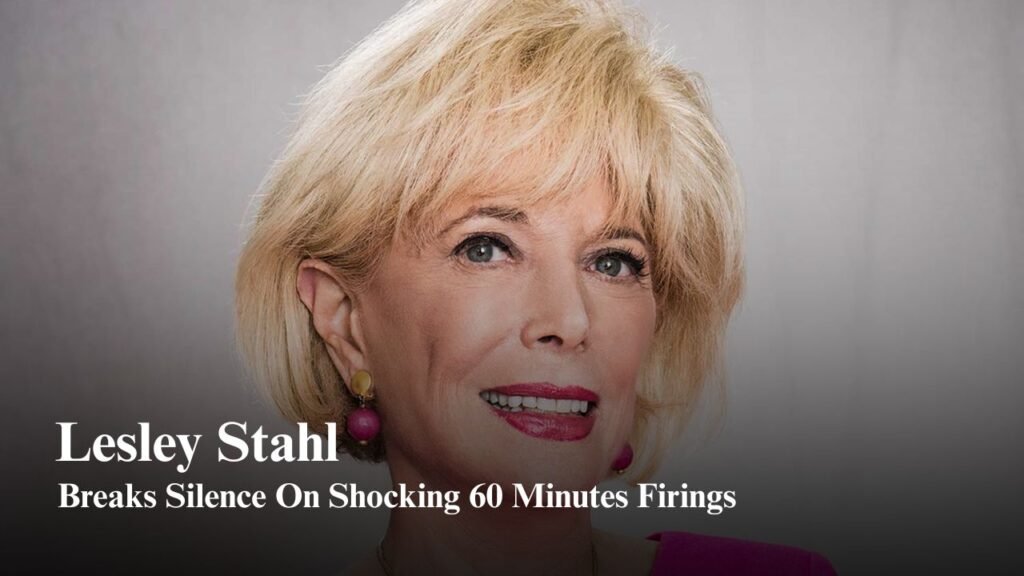
When Lesley Stahl speaks about 60 Minutes, people usually expect calm authority, not visible heartbreak. Yet her latest comments on the firings inside the celebrated CBS newsmagazine carry the weight of a newsroom forced to explain itself. Stahl, who has spent more than five decades at CBS News, described the upheaval as the hardest chapter of her long career. That sentence alone turned a corporate shakeup into a public reckoning.

It is about whether a trusted television brand can survive a bruising internal war without losing the culture that made it matter. Stahl’s words sounded restrained, but beneath them was a warning: the damage is not cosmetic. It has reached the bones of the broadcast.

Why Lesley Stahl’s Reaction Made The 60 Minutes Firings Feel Explosive
Stahl did not speak like an outsider offering polite sympathy. She spoke like someone watching a family room emptied overnight. The firings included senior leaders, producers, correspondents Cecilia Vega and Sharyn Alfonsi, and later Scott Pelley, whose clash with new executive producer Nick Bilton widened the crisis. For viewers, those names may appear as credits. Inside 60 Minutes, they represent decades of institutional memory, editorial judgment, and battlefield-tested trust.

That is why Stahl’s response landed sharply. She did not reduce the matter to contracts or ratings. She placed it inside the emotional life of journalism, where reporters, editors, camera crews, and producers depend on each other under pressure. In that world, sudden dismissals are not personnel moves. They can feel like a message about what kind of journalism is welcome.

Before the deeper questions come into focus, two tensions explain why this controversy grew quickly:
- The firings struck both management and on-air talent, making the change look structural rather than routine.
- The remaining correspondents chose to stay, while insisting their decision was not approval of the current power structure.
The CBS Shakeup Timeline Behind Stahl’s Uneasy Decision To Stay
Stahl, Bill Whitaker, and Jon Wertheim faced a painful choice after the departures. Leaving could have signaled protest, but staying could have been misunderstood as surrender. Their statement tried to split that difference. They said they feared their return might be seen as endorsement, then rejected that idea directly. Their reason was simpler and more dramatic: they did not want to see 60 Minutes die.
| Issue | What Happened | Why It Matters |
|---|---|---|
| Leadership Change | Tanya Simon was replaced by Nick Bilton. | It raised questions about experience and editorial direction. |
| Correspondent Exits | Cecilia Vega, Sharyn Alfonsi, and Scott Pelley were out. | The losses weakened the show’s familiar public identity. |
| Stahl’s Choice | She stayed with Whitaker and Wertheim. | The decision framed survival as resistance, not comfort. |
The table only hints at the human cost. Stahl described colleagues waiting to see what she and the other remaining correspondents would do. That image is powerful because it shows how much symbolic responsibility now sits on three people. They are not just continuing assignments. They are being asked, fairly or not, to hold a wounded institution together.
What Scott Pelley’s Firing Added To The 60 Minutes Drama
Scott Pelley’s exit turned internal anxiety into a national media story. Pelley had challenged the new leadership, demanded answers about why colleagues were removed, and alleged that editorial pressure threatened the program’s standards. Bilton, according to reports, framed Pelley’s conduct as hostile and insubordinate. Stahl suggested that Pelley kept asking the question many others wanted answered: why were these people fired?
That question remains at the center of the controversy. Without a clear public explanation, every dismissal becomes part of a larger theory. Some see modernization. Others see political pressure. Some see a managerial reset that ignored the emotional architecture of a legendary newsroom. Stahl’s significance is that she did not pretend the ambiguity was harmless.
For readers trying to understand the stakes, Pelley’s firing added three layers of tension:
- It put allegations of editorial interference beside the staffing cuts.
- It turned private newsroom grief into a public argument about journalistic independence.
- It left Stahl’s group carrying the burden of defending the show’s reputation from inside.
Can 60 Minutes Rebuild Trust After This Public Newsroom Rift?
Trust is the rarest currency in journalism, and 60 Minutes built its empire on appearing steady when everyone else sounded frantic. The current crisis threatens that image because viewers are being asked to believe in the product while the people who make it are openly hurting. Stahl’s decision to remain may reassure loyal viewers, but it also creates a suspenseful test. Can a damaged newsroom repair itself while still producing fearless work every week?
The answer will not come from memos or public-relations language. It will come from the stories that air next, the edits that survive internal debate, and the confidence reporters show when they ask powerful people uncomfortable questions. If the broadcast starts looking cautious, critics will say the firings changed the DNA. If it remains tough, Stahl and her colleagues may prove that staying was the harder, braver move.
What Lesley Stahl’s Stand Means For The Future Of 60 Minutes
Lesley Stahl’s comments matter because they turn a corporate decision into a moral test. She is not simply defending old colleagues or protecting a famous brand. She is asking whether a program built on independence can endure a season of distrust without becoming smaller, safer, and less necessary. The suspense now is not whether 60 Minutes will continue. CBS has every reason to keep the name alive. The real question is whether the show can still feel like 60 Minutes when so many of the people who shaped its voice are gone.
For now, Stahl’s choice to stay reads like a promise made under pressure. It says the institution is wounded, not finished. It says the remaining journalists believe repair is still possible. And it leaves CBS with a challenge no executive can solve by memo: prove, story by story, that the most famous stopwatch in television news still counts down to truth.
