
Apple’s Star City series gives a darker look at the Soviet space race

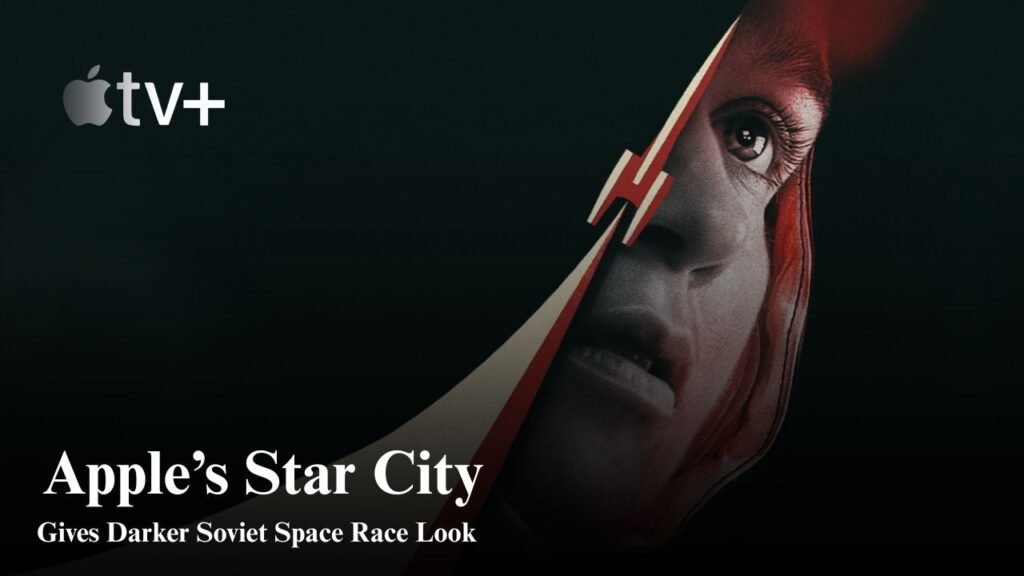
Apple’s Star City series offers a darker and more secretive look at the space-race story, pulling focus away from the familiar American victory story and towards the pressure-cooker world of Soviet ambition. The title itself suggests a place constructed for glory, but the series’ greater appeal is what that glory might have cost. Instead of telling the simple story of rockets, medals and national pride, Star City seems to look at the emotional toll on the people caught within a system that had to succeed and could take a heavy toll for failure. Which is why the show seems more suspenseful than a standard historical drama. It’s more than just the space. This is about silence and fear, about sacrifice and loyalty, about human desire to reach for the stars while standing in the heavy shadow of politics.

Why Star City Is More Exciting Than A Typical Space Drama
Most space dramas celebrate courage, invention and the joy of discovery. Star City, though, has a more frosty tone, seemingly interested in what happens before the launch and after the applause. The real tension is not just rockets blowing up or missions going wrong. It’s from the rooms where decisions are made, from the buried reports, from the people who have to smile for the public even when they know the truth is more painful. It creates a suspense that feels personal, rather than merely technical.

This is where Apple’s dramatic approach can shine. A darker space-race series has the opportunity to slow down and focus on mood. The under-the-radar discussions, tense meetings, hidden files, and private doubts can be just as important as launch sequences. In a story like this silence could be more potent than explosion. A character looking away at the wrong moment can say more than a speech. That’s the sort of drama that can keep an audience’s attention because the danger isn’t always obvious.

- Political pressure: Every success is a national weapon, not just a scientific step.
- Human toll: Cosmonauts, engineers, families may pay for victories in fear and loss.
- Moral conflict: Characters will be forced to choose between loyalty, truth and survival.
The Soviet Space Race: A Tale of Fear, Pride and Control
The best thing about a darker Soviet space-race drama is that it can show a co-existence of pride and fear. The Soviet space programme was not based on politics alone. It was also built on real brilliance, discipline and courage . Many of those who took part in it really believed they were helping mankind to go forward. This belief gives the story emotional depth. These characters are not just victims of the system. They may also be dreamers, patriots, scientists and explorers wanting to be part of something historic.

The series also has an opportunity to explore how public heroes can become private prisoners. Cosmonauts were icons of national power, but icons often lose the power to control their own lives. Their faces can be poster faces, their words can be prepared by government officials, their personal fears can be set aside for the bigger story. A drama built on that tension can feel powerful because it asks what happens when a human being is turned into a national myth.
How Apple’s Star City Could Change How We Experience Space History
One reason Star City seems to matter is that it can extend the emotional range of space history. For years, some of the best-known stories about the space race have been American stories, especially the race to the Moon. That is a dramatic and important story, but it is not the whole story. The Soviet side has its own heroes, its own tragedies, secrets, rivalries and impossible decisions. By looking back towards that world, the series has the potential to help viewers understand the space race as a more complicated human contest, not a neat scorecard of winners and losers.
The darker tone also speaks to modern viewers because it poses a familiar question: how much should people sacrifice for progress? Space exploration is often touted as being noble, but every great project has a hidden cost. Money, time, safety, family life, truth and personal freedom can be put on the table. Star City seems to be modelled on that discomfiting notion. It asks whether a dream is still pure when it is exploited by power, whether greatness is still admirable when it is based on fear.
Star City feels timely as space ambition turns dark
The reason a series like Star City can strike such a chord today is that viewers are more interested than ever in the price of powerful institutions. Viewers don’t just want heroic posters and clean wins anymore. They want to know who was silenced, who was pressured, who was used and who bore the emotional damage when history moved on. This is why the Soviet space race is a perfect backdrop for a serious drama: it has beauty and danger in the same shot.
Why Star City’s Dark Soviet Space Story May Linger With Viewers
Apple’s Star City series is powerful because it takes a familiar historical subject and moves it into a colder, more human place. Rather than presenting the Soviet space race as a remote episode in the history of science, it transforms it into a tense world of pressure, secrecy and emotional conflict. The promise of the series, then, is not in rockets or training rooms but in the private lives of people saddled with impossible expectations.
