
Tesla Autopilot and FSD Crashes Reach Record 207 in a Single Month as Safety Questions Grow

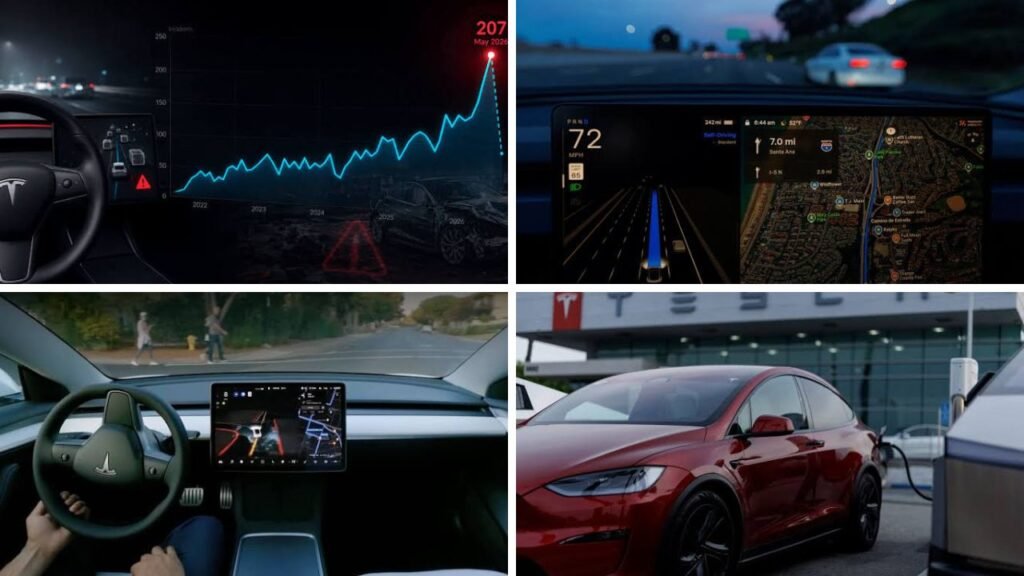
Tesla’s Autopilot and Full Self-Driving systems are under fresh scrutiny after an analysis of federal crash reports found 207 Tesla incidents in May 2026. That was the largest monthly total in the dataset for the company. The figure has amplified debate over whether advanced driver-assistance technology is improving fast enough as its use spreads. But the numbers itself don’t prove Autopilot or FSD caused every crash reported.
 Ford Recalls 565000 Bronco and Bronco Raptor SUVs Over Engine Fire Risk What Owners Need to Know
Tesla Crash Report of the Month.
Electrek discovered the record monthly Tesla crash reports by digging into data submitted to the National Highway Traffic Safety Administration. Tesla reported 826 crash reports involving driver assistance systems from January to June 2026, compared with 476 during the same six-month period in 2025. That is a 73 per cent rise. The article also revealed that Tesla had 3,763 distinct events across the whole dataset, representing nearly 85 percent of recorded Level 2 ADAS collisions.
What the Federal Data Really Shows
NHTSA requires companies to disclose certain crashes involving a Level 2 assistance device that was engaged within 30 seconds of impact. The duty often covers instances involving a death, an airbag deployment, hospital treatment or a vulnerable road user such as a pedestrian or cyclist.
 Honda Ridgeline Hiatus Confirmed as New Next Generation Teaser Reveals the Pickup Truck Will Return
These reports show that a system was recently engaged, not that it was culpable. Other vehicles, weather, software behaviour, a driver’s decisions and road circumstances may all play a role in an occurrence. Unconfirmed or incomplete information may also be included in initial submissions.
 Ford Mustang Shelby Super Snake Convertible: Why the Owner Is Selling It After Just 121 Miles
Comparing brands head-to-head might be deceptive
NHTSA recommends against using its raw totals as an apples-to-apples safety assessment. For manufacturers, access to car data is different. Tesla can capture data through connected-vehicle telemetry, while another automaker might only learn about a mishap through a customer, an insurer or a police complaint. Thus, a firm with better data gathering may submit more reports even if it does not have a higher crash rate for its vehicles.
Another missing element is exposure. More Tesla cars might be employing driver-assistance systems and drivers might be driving more miles with help. Without a transparent crash per mile figure for the same period it’s hard to say if the underlying risk has increased, decreased or stayed stable.
Tesla’s Safety Claims Come Under Fire
Telemetry facilitates comparisons between FSD Supervised and Tesla vehicles operated manually, according to Tesla. The company says it records any collision observed, no matter who or what caused it. It argues FSD has a safety benefit compared to its own fleet of vehicles.
Some broader comparisons by Tesla with national crash data have been challenged by independent researchers interviewed by Reuters. They noted variations in crash severity, car age and driving circumstances can affect the results.
Continued Regulatory Pressure
In March 2026, NHTSA widened the probe that involved around 3.2 million Tesla vehicles with FSD. Regulators are looking at whether the camera-based system can detect reduced visibility from sunlight, dust or other obstructions and provide drivers enough warning. The government tied nine events to the issue being reviewed, including one fatal crash and two injury crashes.
Individual situations also demonstrate the need for basing conclusions on evidence. In a preliminary assessment in July, the National Transportation Safety Board claimed an FSD Supervised-engaged driver in a tragic Texas incident had the vehicle travel off the road. Electronic vehicle data is the subject of an ongoing investigation. Both Autopilot and FSD are still driver-assistance features and drivers have to stay alert and be prepared to take over.
Sources
- Electrek- The study showed 207 Tesla driver-assistance crash complaints in May 2026 and 826 reports in the first half of the year.
- NHTSA- Its reporting order includes qualifying crashes in which Level 2 ADAS was engaged in the 30 seconds leading up to the crash.
- Reuters – Safety researchers wonder if Tesla’s comparisons employ equal collision severity, vehicles and driving conditions.
- Tesla – The business says it can compare Supervised FSD driving to manual Tesla driving using car telemetry.
- NTSB – Preliminary report revealed FSD Supervised was engaged before tragic Texas crash on June 19, 2026
