
SpaceX Launches Starship V3 in Major First Test Flight

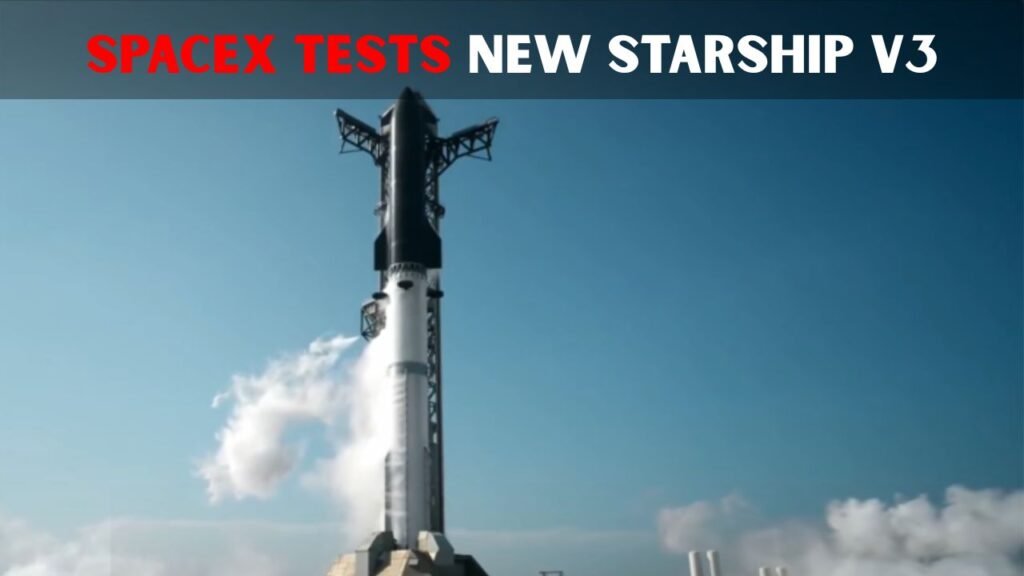
SpaceX has carried out a major first test of Starship V3 from its Starbase facility in Texas, a big step forward for the company’s reusable rocket programme. The uncrewed flight was designed to test the upgraded Starship spacecraft, the Super Heavy booster, payload deployment, flight control, heat shield performance and ocean splashdown procedures. Starship flew into space, deployed dummy Starlink satellites, survived a high-heat reentry through Earth’s atmosphere, and ended with a controlled splashdown in the Indian Ocean. There were some issues with the test (some engine and booster return problems) but it did provide useful engineering data to SpaceX. This is important for NASA, commercial satellite launches, and future Moon or Mars plans as Starship V3 is designed to carry larger payloads, support refuelling concepts, and achieve full reusability.
 WhatsApp Responds to Centre Over Username Feature Proposal With New Platform Update Details
Main Update: What Happened in the Starship V3 Test
The first Starship V3 test flight was about proving that the new rocket could lift off cleanly, separate stages, fly through space, release payload test units and re-enter through the atmosphere. It was a development mission. The primary purpose was learning, not carrying people or real commercial cargo. The booster did not complete all of its return manoeuvres and the spacecraft had engine limitations, but the rocket accomplished many of its planned goals, reports say. In short, SpaceX used this launch to test if the new design can handle real flight pressure. That was a strong sign that Starship V3 is coming, but more tests are needed before routine missions for satellites, lunar work and deeper space flights.

- Starship V3 lifted off from Starbase, Texas.
- The mission was experimental and unmanned.
- The rocket tested flight control and stage separation.
Why Starship V3 Matters for SpaceX and NASA
Starship V3 matters because it’s not just another rocket update. SpaceX hopes to make it fully reusable. It’s a bigger, tougher, more capable version of the Starship system. If successful, a single vehicle family could launch heavy satellites, support Starlink expansion, assist NASA lunar landing plans and eventually support Mars-focused missions. The big idea behind Starship is simple: fly more often, carry more mass, and reduce the cost to get to orbit. This first V3 flight thus provides engineers with data on engines, guidance, heat protection, payload release and vehicle strength. Each result is a data point that helps SpaceX decide what to fix before the next launch attempt and how to prepare future operational flights with better reliability, safety and performance margins.

- It’s a boost for SpaceX’s reusable rocket effort.
- That could help future launches of Starlink satellites.
- This is key to planning NASA Moon missions.
Key Technology Tested During the Flight
The V3 launch was a test of several major technologies at the same time. The Super Heavy booster had to push the full stack away from Earth, and the Starship upper stage had to continue flying after separation. They also tested payload deployment with mock Starlink satellites, helping to prove that the cargo system can operate in flight. There was also a big focus on re-entry – Starship has to survive extreme heat when it returns from space. The Indian Ocean splashdown gave SpaceX one more chance to check control, landing burn behaviour and vehicle response late in the mission. “This information is useful for improving future recovery plans, more robust thermal systems, engine restart options and mission safety.” They also inform choices on future Starship upgrades.

- The booster tested heavy lift launch power.
- The upper stage was tested for its flight performance.
- Payload bay tested for satellite release capability.
What Comes Next After This Test Flight
SpaceX will review data from all phases of the mission following the flight. Engineers will look at engine performance, booster behaviour, markings on the heat shield, flight software, timing of the payload release and splashdown control. The next goal will probably be to reduce the anomalies to the minimum and get to the recovery and recycling of both stages. Starship has a lot of proven flights to go before it can safely carry astronauts or support high-value missions. But the V3’s first flight shows the programme moving from computer models to practical testing. The bottom line for readers: This was not a final product launch, but a serious development milestone for reusable space transportation and future exploration. Every test makes the system as a whole safer and more reliable.
- SpaceX will review all flight data in detail.
- The engine and booster issues will be examined.
- We are going to be watching the heat shield very, very closely.
Final Discussion
“The first major test flight of Starship V3 was a big deal for SpaceX, because it got to test a lot of the upgraded systems out in real flight conditions. The mission demonstrated advances in launch power, payload testing, re-entry control and ocean splashdown, but also brought to light problems engineers have to work out. That is normal for a testing programme. The data will be used by SpaceX to improve future Starship flights.” As future tests become more reliable, Starship V3 could play a major role in satellites, Moon missions, deep-space travel and reusable space transport globally soon for years ahead.
