
Palantir Stock Drops After Investors React to the Company’s Latest Market Performance

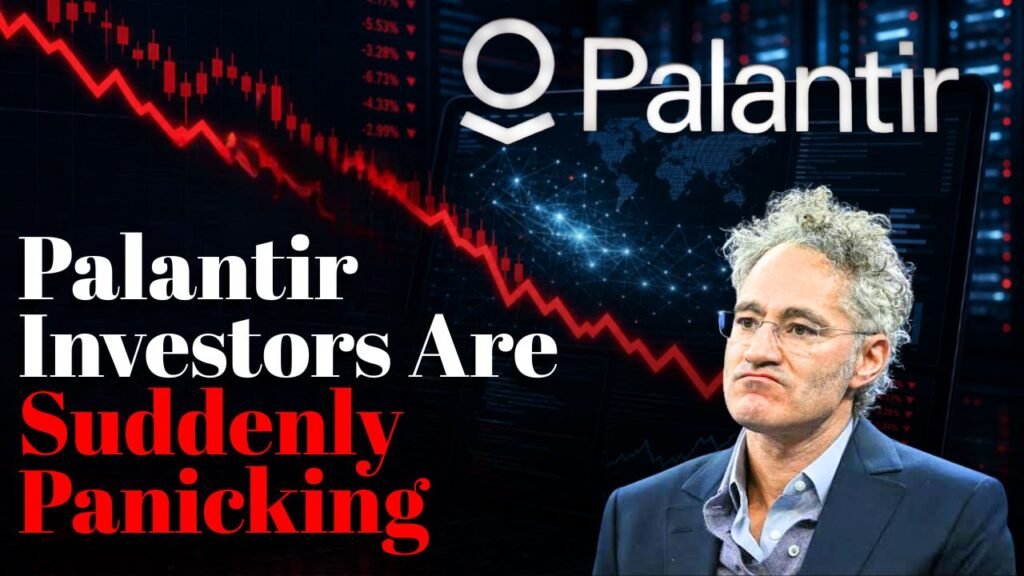
Palantir Stock Drops : Palantir Technologies is back on the list of the most carefully watched names on Wall Street, but this time not all the attention is positive. The company posted excellent growth, a robust demand for its artificial intelligence capabilities and an upgraded projection for the year. Still, its shares have been under pressure as investors reassess how much they are willing to pay for high-growth AI software businesses. The recent decline in Palantir shares illustrates a significant disparity between operational results and investor anticipations.

Pressure on AI Software Valuation
The key catalyst for Palantir’s recent decline has been pressure on AI software valuation. Investors aren’t doubting the company’s growth prospects, but they are wondering if the stock has gone too far too soon. Palantir’s share price had surged in recent years as optimism around artificial intelligence sent investors flocking to firms perceived as long-term winners. The stock has pulled back from its highs and the market seems to be testing the valuation to see if it still reflects the future growth potential of the company.

Strong Numbers, Weak Praise
There was plenty for the bulls to point to in Palantir’s recent quarterly results. The company said sales for the first quarter of 2026 was $1.63 billion, up 85% from the same period a year earlier. U.S. sales grew 104% and U.S. commercial revenue surged 133%. None of these are small upgrades. Palantir’s Artificial Intelligence Platform is reportedly getting genuine momentum with government agencies and business customers. The company also boosted its sales projection for the year, signalling confidence that demand will remain robust through 2026. Such numbers might have led to a big surge under normal circumstances. Instead, the market reaction was measured. Shares slid after the disclosure and then fell further as broader pressure struck the software industry.

Stock Hits New Low
Palantir’s selloff has been brutal. The stock has fallen for several sessions in a row, lately reaching a new 52-week low of over $106. The currency also suffered a heavy loss in June, recording one of its worst monthly performances in years. The fall sent the stock well below its record high from late 2025 and below important technical levels traders watch.

With this kind of price activity, sentiment may change fast. When a stock starts to fall, short-term investors tend to step aside. Technical traders may also interpret broken support levels as a warning indicator. That can add to the burden even when the company’s business performance are solid.
What’s Got Investors Nervous
The problem is valuation. Even with the drop, Palantir still trades at a premium to many other software businesses. That premium is a result of the company’s strong position in AI, significant government links and quick commercial expansion. But it also introduces risk. A solid earnings report can fall short when expectations are high.
Investors are also looking at the broader software sector. AI excitement has not been equally good for all companies. Some money has flowed into hardware and chip names, where investors expect more immediate benefits from AI infrastructure spending. That rotation has put pressure on software stocks, even those with good growth stories. There are also problems of competition. The big AI companies are moving into areas that might overlap with enterprise and government software. Palantir continues to benefit from tightly embedding its products within data operations and decision-making systems, but investors will be watching to see if new competitors can break that edge.
Commercial and Government Demand Still Critical
Demand remains Palantir’s best argument. The corporation has established a strong position in government work, particularly in defence and intelligence-related programmes. Its commercial operation in the U.S. has also become a major growth engine. Palantir’s fast growth in U.S. commercial income proves it’s no longer perceived as a government contractor only.
This is important because investors want to see a wider base of customers. A robust commercial business might lessen Palantir’s reliance on government contracts and provide it with more flexibility to grow. Its AI platform has attracted companies who want to be more effective in using data in operations, shipping, finance and security.
But the market still wants steadiness. Palantir will need to show that its recent acceleration is not simply a one-time increase driven by AI hype. Has to demonstrate that clients will continue to extend their usage of its systems across multiple quarters.
What’s Next For Palantir?
Palantir’s next stage will depend on execution and investor tolerance. If the company can keep growing revenues at a healthy pace, protect its margins and promote commercial usage, the stock could find support. “Lower share price may also attract buyers who were concerned about valuation earlier.
But the volatility is expected to continue. Palantir is still priced like a firm that is expected to generate outstanding outcomes. Any evidence of weakening demand, cautious guidance or slowdown could spur more selling. On the flip side, a good quarter might remind investors why the stock became such an AI darling in the first place. Palantir’s current decline has less to do with a bad business and more to do with a bad market. The company is developing fast, but investors want more difficult questions asked. Strong performance isn’t enough after a tremendous run. Palantir has to keep proving that its AI growth story can justify the amount investors are being asked to pay.
