
Coca Cola Challenges IRS in Massive $20 Billion Tax Battle

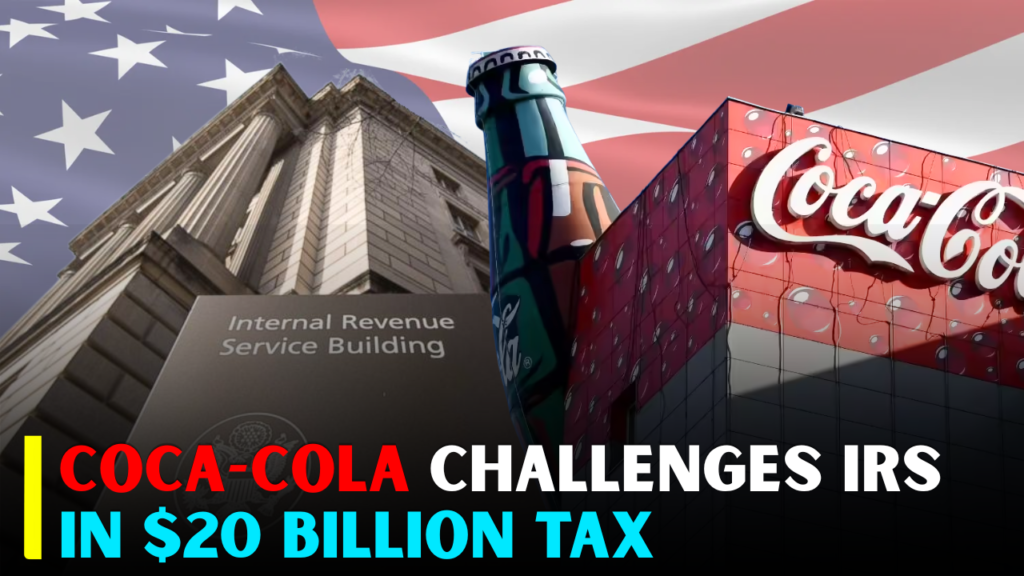
Coca Cola Challenges IRS : Coca-Cola is in one of the greatest tax conflicts in modern corporate America. This war is not about soda sales or marketing or competing for shelf space in the beverage aisle. The question is whether the corporation properly reported revenues made abroad and if more of that income should have been taxed in the U.S. Coca-Cola moved too much earnings to foreign affiliates, the Internal Revenue Service claims. Coca-Cola said it had used a procedure accepted by the IRS years before. The lawsuit, which might be worth as much as $20 billion, has become a big test of how far the U.S. tax agency can go in confronting global firms.

Dispute on Transfer Pricing
The transfer pricing controversy involves Coca-Cola’s tax returns for 2007 to 2009. Transfer pricing guidelines establish the prices that are to be used for intra-group transactions between associated enterprises within the same worldwide group. The problem for Coca-Cola was overseas affiliates that used the company’s brands, formulae and marketing rights to produce and sell products outside the U.S. The IRS says the affiliates kept too much profit and allocated additional income to the U.S. parent business. Coca-Cola disagrees, saying the government modified the regulations after the fact.

High Stakes
The money at stake is well beyond the original tax years. A U.S. Tax Court judgement in 2024 created nearly $2.7 billion in obligation. Coca-Cola figured the sum, with interest, would be somewhere about $6 billion. The corporation paid that amount as it pressed on with the appeal.

The risk is even broader. If the IRS approach is sustained and extended to later years, Coca-Cola has calculated it might owe an additional $14 billion in taxes and interest for 2010 through 2025. That is why the overall exposure is generally said to be about $20 billion. A loss also might boost Coca-Cola’s future effective tax rate and impact cash flow. A win would let the firm recoup what it has paid plus interest.

Battle for Foreign Profits
The question is where Coca-Cola should report its profits. That question isn’t quite as easy as it seems. Coca-Cola isn’t just selling bottles of soda. Its worth is in trademarks, secret formulations, brand cachet and worldwide marketing systems. These assets can be licensed across borders within the same corporate group.
The IRS said Coca-Cola’s foreign supply operations and affiliates were generating profits too high for the labour they did. The government argued that the US parent had the most valuable assets and should have reported more revenue in the home country. Coca-Cola said its international affiliates are real players in local markets, not simply paper corporations intended to cut taxes.
Why the 1996 Agreement is Important
A crucial portion of Coca-Cola’s claim goes back to a 1996 deal with the IRS. That agreement settled past tax years and provided a means to determine certain income from foreign licensees. Coca-Cola said it has employed that methodology for years and had every reason to assume the method remained acceptable until the facts or law changed significantly.
The IRS, however, takes a different view. It contends the arrangement did not tie the agency to any additional tax years. The former approach also did not prevent the government from looking at whether Coca-Cola’s later reports clearly showed income, it argues. This dispute has made the matter a larger debate about consistency, reliance and agency power.
What Coca Cola Says
Coca-Cola said the IRS unfairly changed its position, rejecting a method it had accepted in the past and applying a new calculation retrospectively. The corporation said it followed the framework it had and that the Tax Court provided too much discretion to the IRS. It further states it strongly disagrees with the agency’s position and expects to defend itself through the appeals process.
The company also told investors it believes its tax position is more likely than not to be sustained on appeal. But it cautioned that a poor conclusion might materially affect its financial condition, results of operations and cash flows.
Why the IRS Pushing Back
This is about protecting the U.S. tax base for the IRS. Multinational corporations regularly transfer intellectual property, license rights, and internal payments across borders. These deals may be lawful, but they can lessen U.S. taxable income by booking earnings in nations with lower taxes. The IRS said transfer pricing laws are meant to deter firms from shifting income in ways that don’t represent economic reality.
If the IRS wins, it would have more leverage in future disputes with other global corporations. A Coca-Cola win would dilute the agency’s victory and potentially embolden other businesses to strike back more aggressively in future instances.
Next steps
The case is now before the U.S. Court of Appeals for the Eleventh Circuit. The appeals court will consider the Tax Court’s ruling and Coca-Cola’s arguments. The ruling could take months and the case may not finish there. The losing party could request additional review.
It is a legal and financial albatross for Coca-Cola. It’s a big test case enforcement for the IRS.” It’s a reminder to other companies that old tax schemes might nevertheless pose fresh dangers many years later. The eventual verdict could influence how global corporations price internal transactions and how vigorously the IRS confronts them.
