
Bitcoin Falls to Its Lowest Price Since February

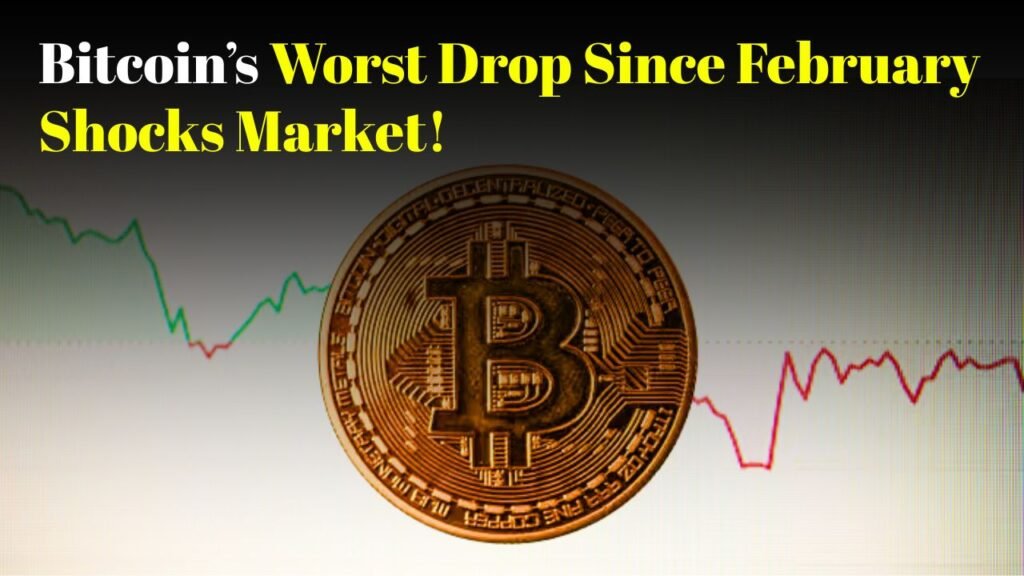
Bitcoin Falls : Bitcoin declined further this week to its lowest level since February, creating fresh concerns across the cryptocurrency industry. After weeks of tumultuous trading, the world’s biggest digital asset lost pace as investors watched closely. The sharp slide came on the heels of rising economic uncertainty, tightening banking conditions and waning investor confidence in riskier assets. Market observers said a combination of global economic pressure and falling trading activity and profit-taking by rich investors had helped to bring the present slump. Bitcoin has seen similar corrections in the past, but the recent decline has brought back talk of whether the cryptocurrency market is on the brink of entering another extended bear market. Bitcoin is consolidating and traders are examining support levels, institutional activity and upcoming economic events that could dictate the next move for Bitcoin.

New market woes as bitcoin price drops
The Bitcoin price fall has quickly become one of the biggest financial stories this month in the cryptocurrency sector. Bitcoin broke through key critical levels of support, which prompted alarm among short-term traders, and heightened uncertainty among long-term investors. Many investors expected Bitcoin would settle after its advances earlier this year but the sell-off has dramatically changed the market atmosphere. Analysts said dwindling demand from institutional investors, the rise of foreign currencies and concerns about interest rate policy had aided the decline. The decrease also brought liquidations across crypto exchanges, further weighing on the market. Despite the losses, some investors still regard the correction as a temporary phase, not a long-term collapse.

Why Bitcoin Just Dropped Lowest Price
There are three key reasons why Bitcoin’s price collapsed so fast. Investors were becoming more cautious as global economic and central bank policy volatility and uncertainty had increased, financial analysts said. Higher interest rates in several nations have sapped the enthusiasm for high-risk investments such as bitcoin. So many traders had moved their money into safer investments like government bonds and traditional currencies.

Another reason for the decrease was enormous profit taking from investors who bought Bitcoin at lower levels earlier in the year. Panic selling was starting to trigger on trading platforms as Bitcoin started to collapse through a number of critical support zones. Automated trading systems and the liquidation of leveraged positions also contributed to the fall.

Sources : CNBC
Market watchers also cited declining transaction volumes as a signal to be cautious. Less participants could mean more volatility if there are less purchasers to soak the hefty sell orders. When there is uncertainty, this might lead to more dramatic price movements.
Impact on the broader crypto market
Soon the fall in the value of Bitcoin had an impact on the whole cryptocurrency industry. The slump in bitcoin also weighed on other big digital assets such as ethereum, solana and binance coin. As the barometer for the broader crypto space, Bitcoin’s decline generally causes investor sentiment to follow suit.
Shares of cryptocurrency and blockchain companies also fell as investors reacted to the price plunge. Several mining companies have painted a bleak picture for the industry, as worries that Bitcoin could stay slow for a while could hurt profits.
The fall also worried retail investors who entered the market after previous price increases. This exacerbated the pressure on the already declining prices as many smaller dealers looked to liquidate holdings to avoid further losses. Experts predict market mood could remain unstable until Bitcoin gives signs of stability again.
Investors Eye Key Support Levels
Traders and experts are now looking at critical technical support levels that could impact the near term direction of Bitcoin. Some experts believe that if Bitcoin can hold above crucial price zones, the market could have a chance to recover gradually. If the collapse is more substantial, however, it might be negative for more dismal attitude and greater selling pressure.
Technical analysts frequently use support and resistance levels as a measure of market strength. Investor psychology is highly crucial in today’s culture because when things are falling apart fear may spread quickly. Short term traders are very reactive to fast price moves and market gossip.
But long-time bitcoin enthusiasts continue to argue that occasional corrections are just part of the normal course of events in the cryptocurrency markets. They point to past market cycles where Bitcoin has suffered huge drops before bouncing again. But uncertainty remains elevated as global financial conditions evolve.
Institutional investors are still wary
Bitcoin’s early rise was a key component of big institutional players but the present financial scenario has many big firms playing it safer. Investment firms are trying to limit exposure to cryptocurrencies until issues such as inflation and economic slowdown and regulatory uncertainty are evaluated.
Markets have been volatile and several financial institutions have scaled back trading activity in digital assets. Some are waiting for more regulatory clarity before ramping up investments in crypto. The buying momentum of the market has been sapped by falling institutional involvement.
Other analysts say institutions remain long-term believers in blockchain technology and digital assets despite the caution. But they are focused on risk management in an uncertain economy. Institutional engagement might be a significant driver for Bitcoin’s recovery over the next few months.
Will Bitcoin Bounce Back from This Dip?
There have been several steep drops in Bitcoin’s history and supporters say this price plunge could ultimately just be another temporary correction. There are a variety of elements that will determine the bounce back of the market including economic stability, investor confidence and regulatory adjustments.
Some market stabilisation may come from positive economic news or increased institutional demand. But prolonged uncertainty or more regulation could intensify the pressure on cryptocurrency values. Analysts say the next few weeks could be key in determining whether bitcoin enters a recovery phase or continues its slide.
Global financial markets remain turbulent and investors are wary at the moment. Some traders are looking to buy the drop, while others are waiting for a better picture of market direction before putting fresh money to work. Bitcoin’s rebound from its latest collapse might very well dictate the entire cryptocurrency market over the next few of months.
